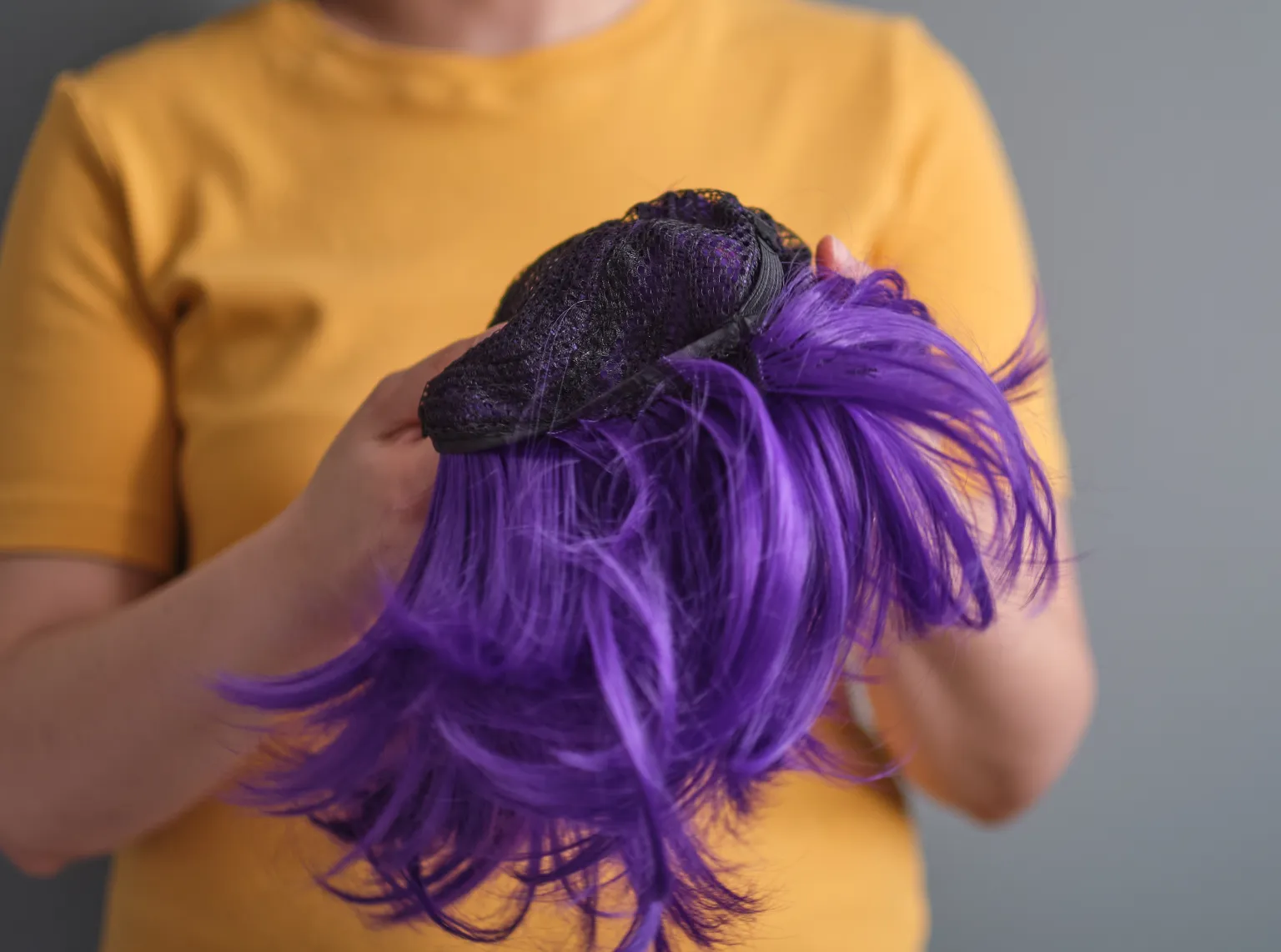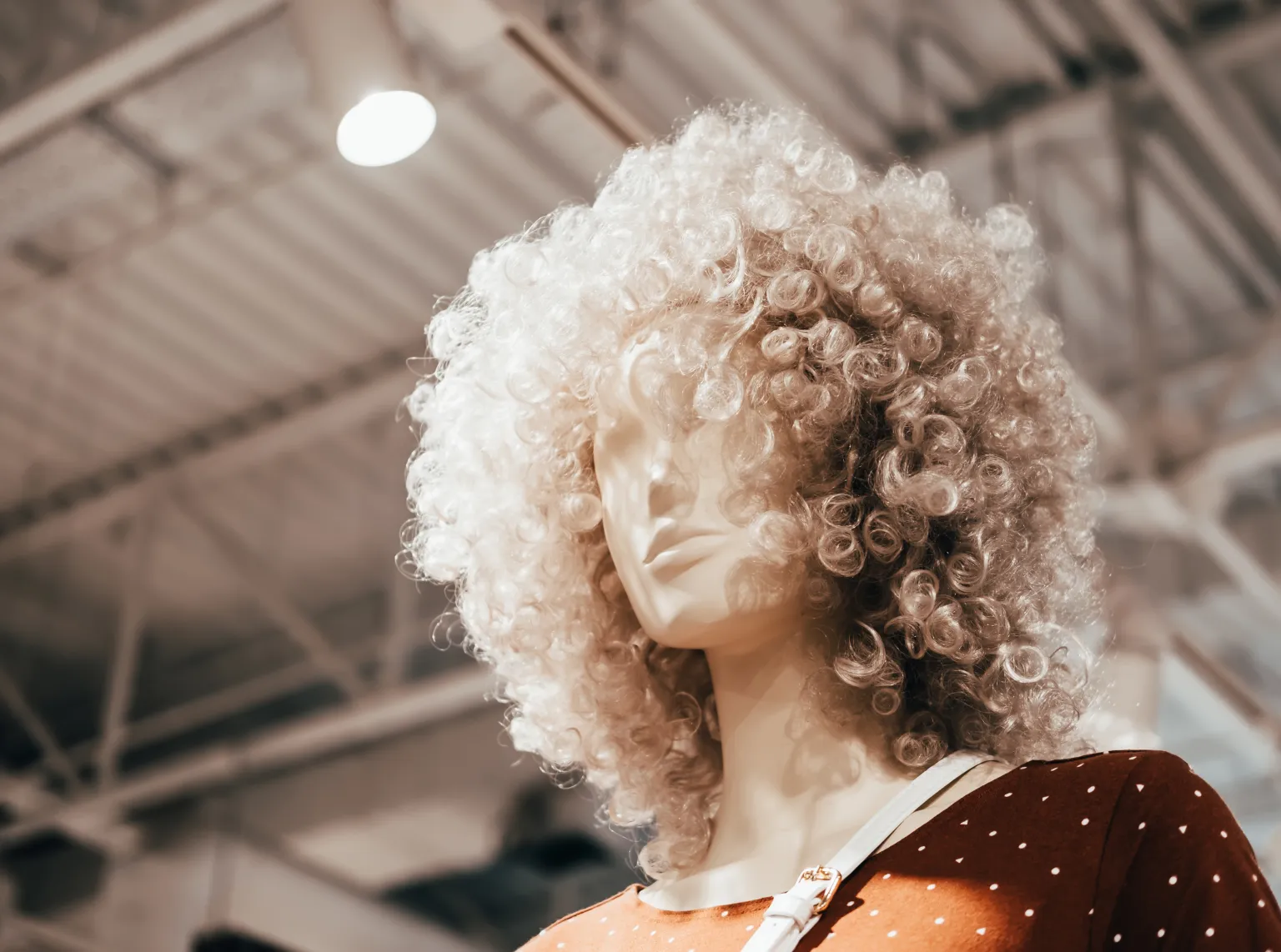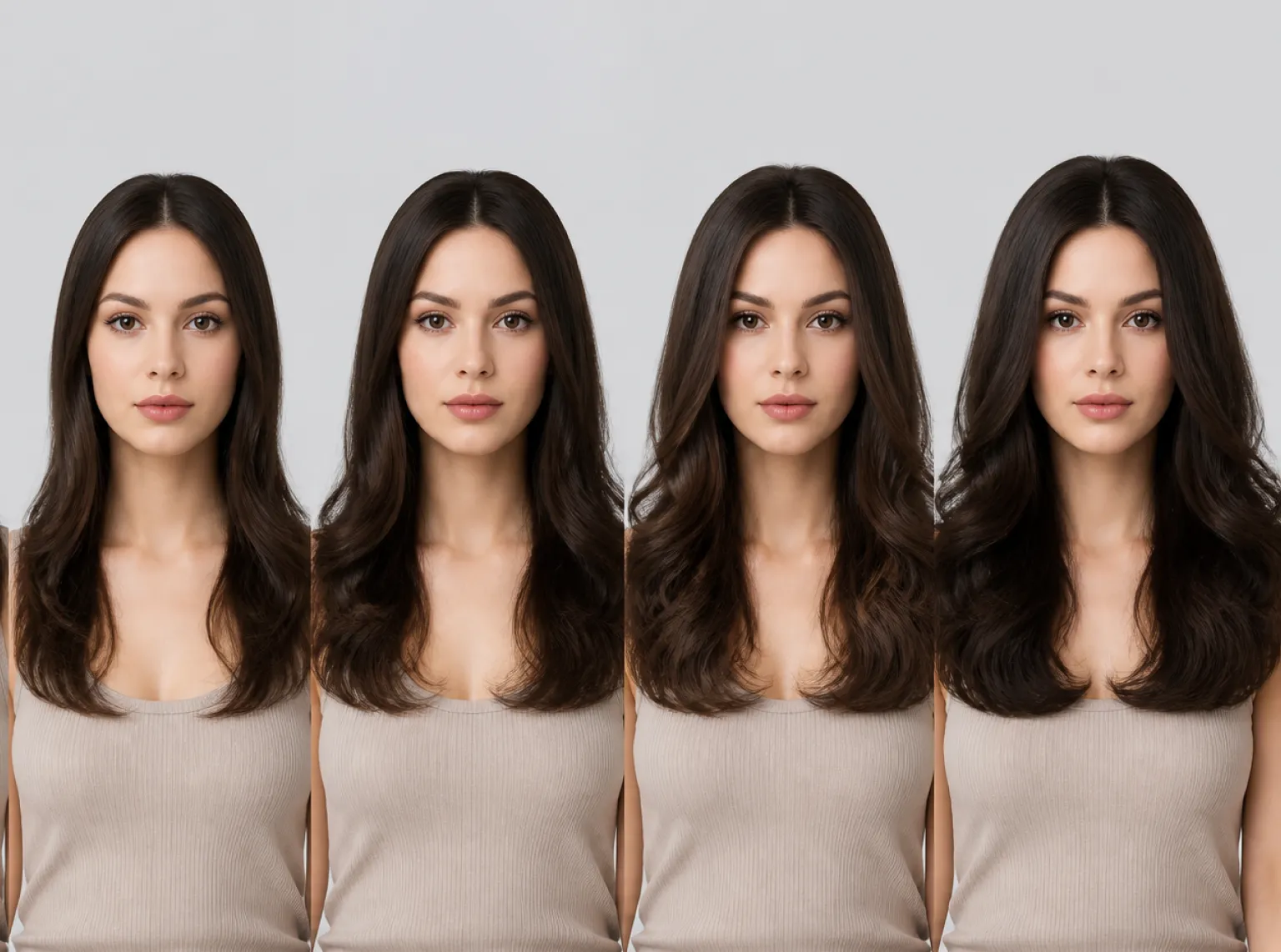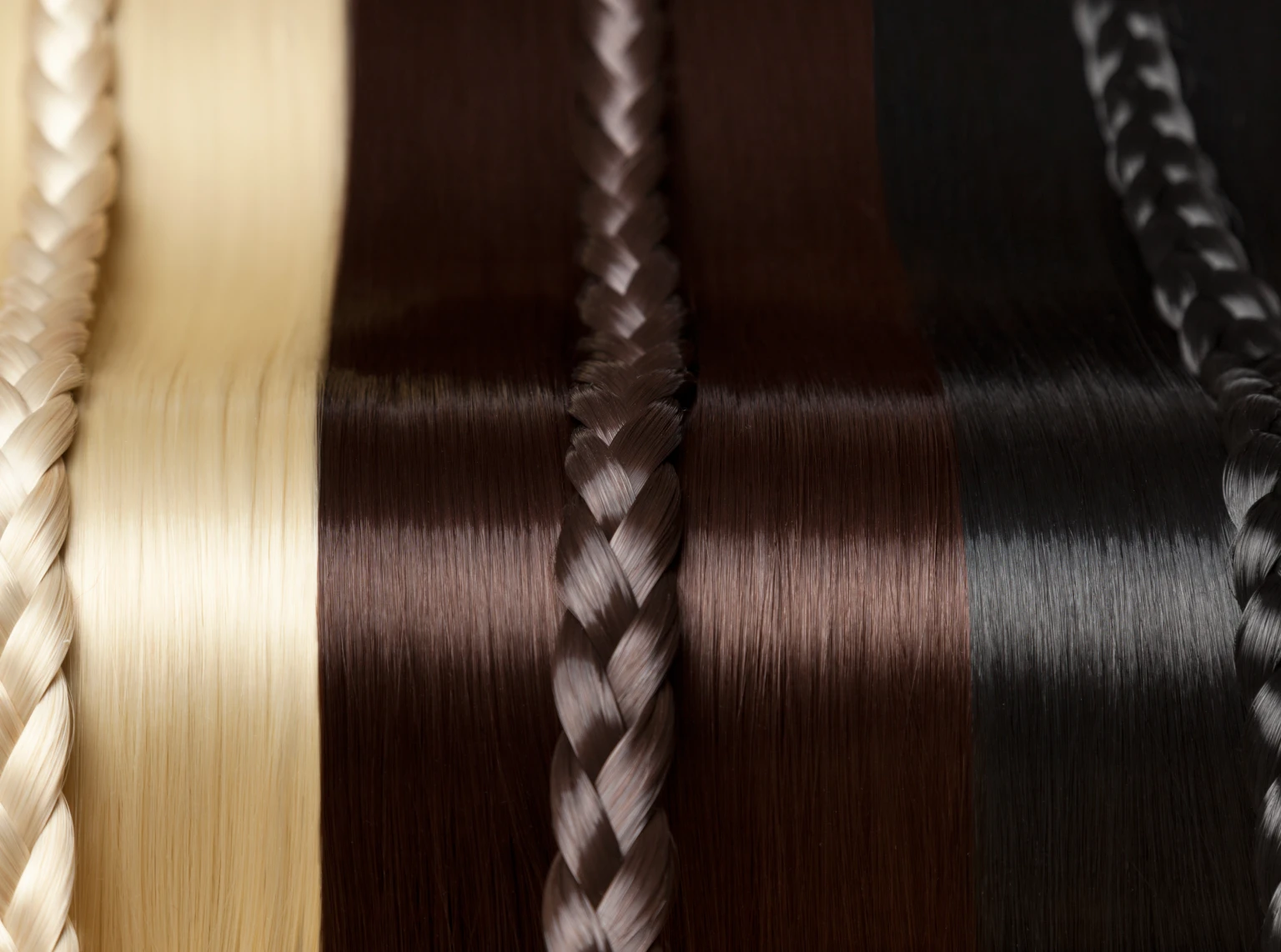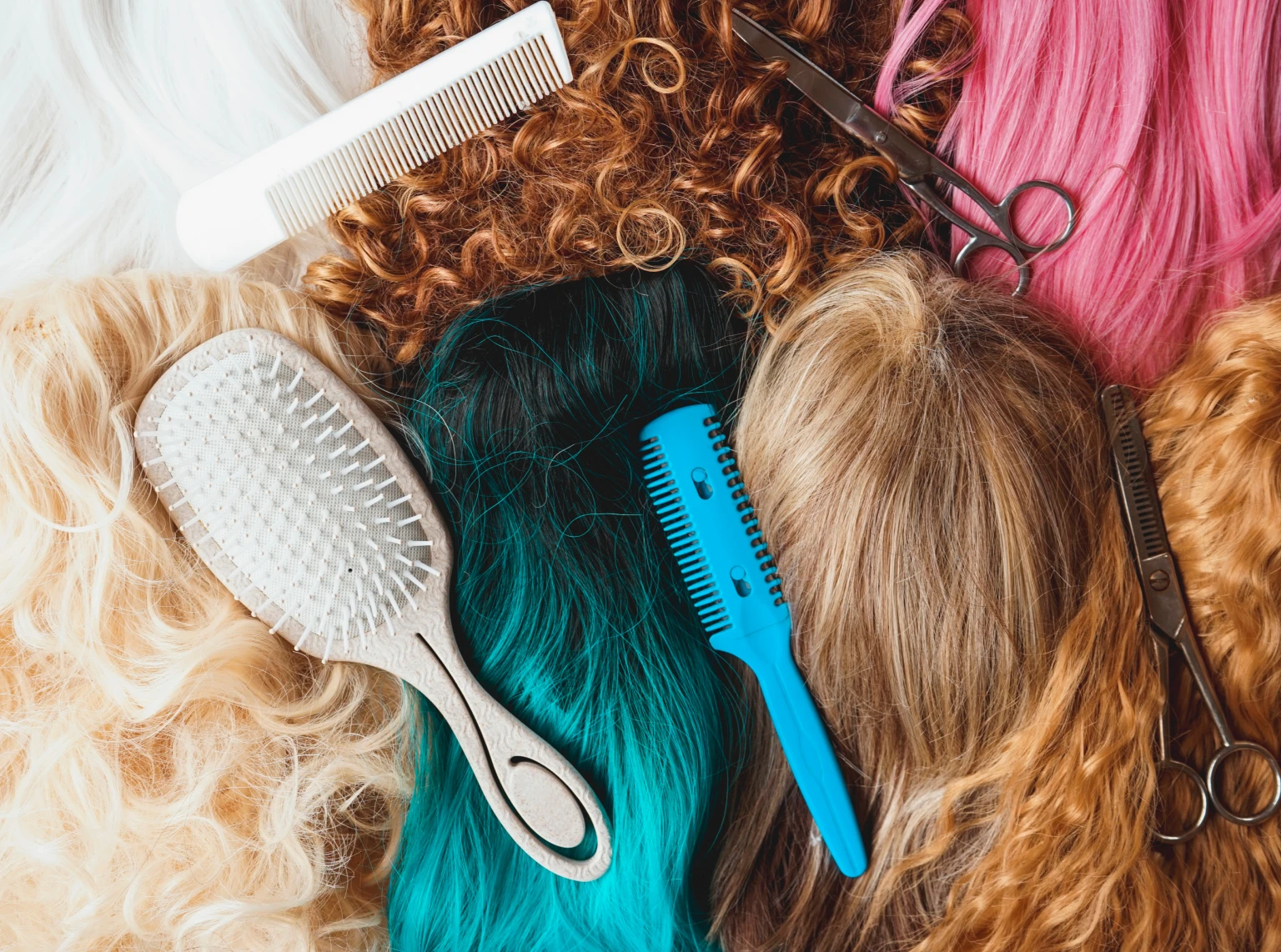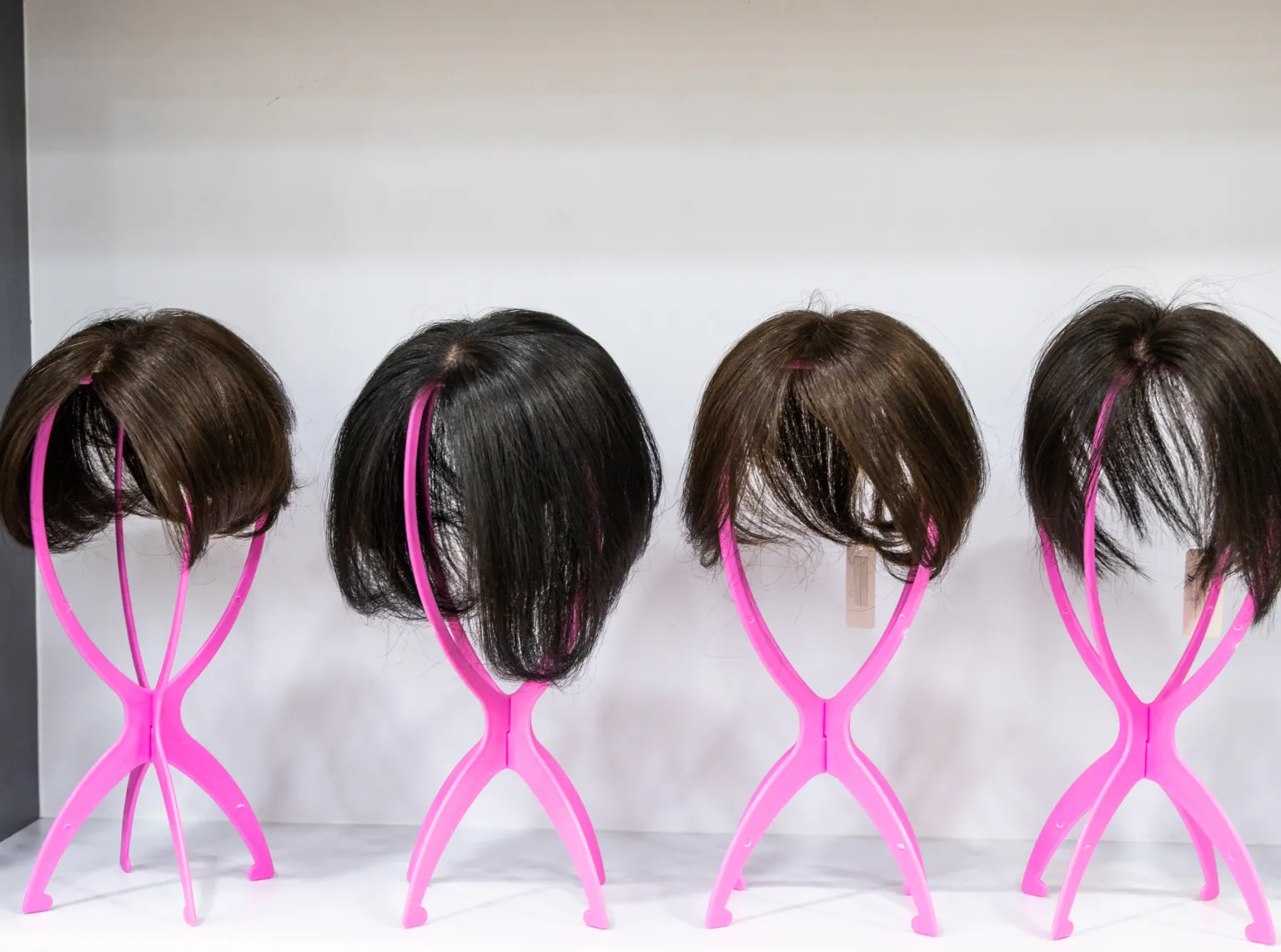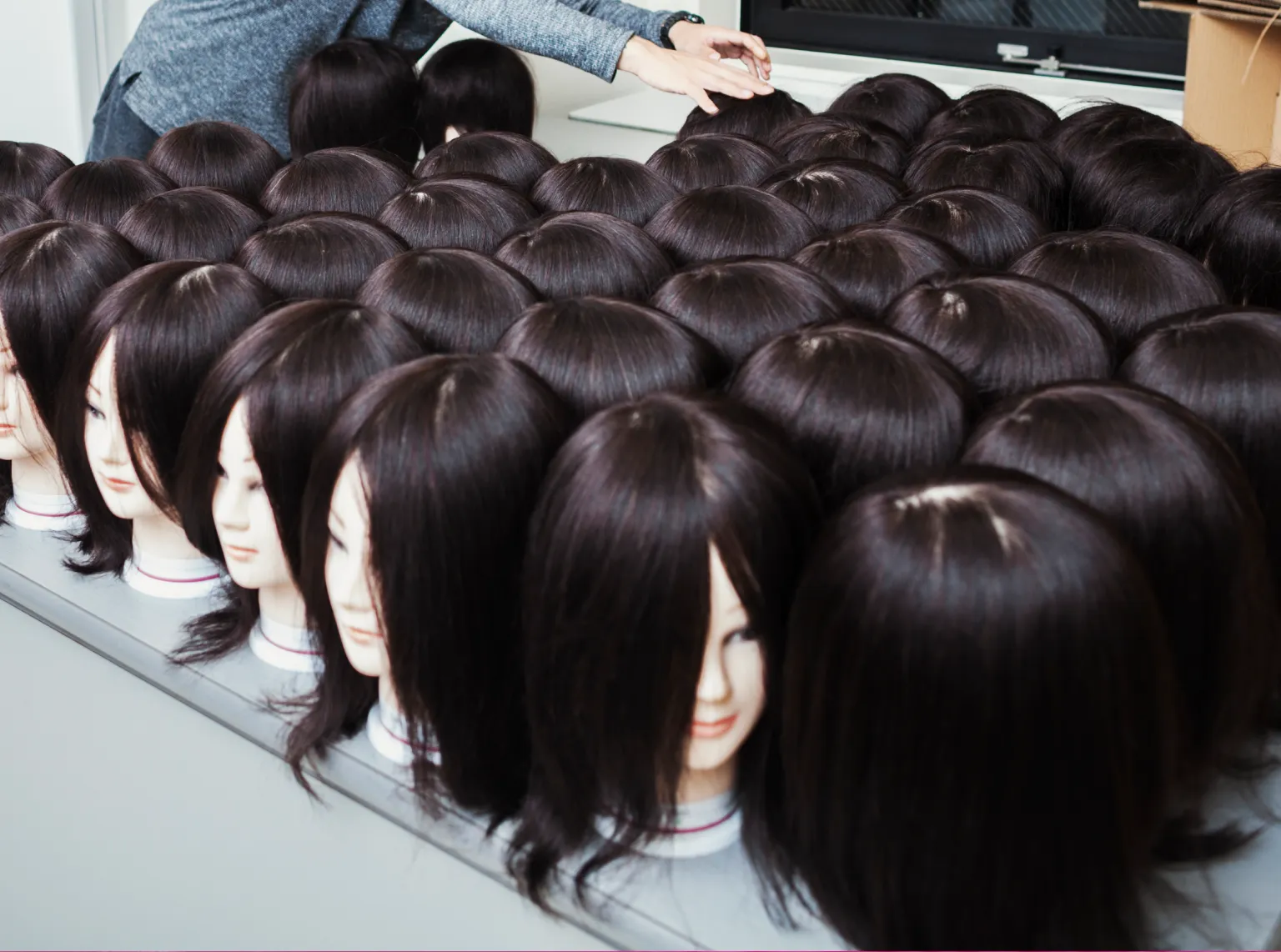

A synthetic wig rarely looks fake because of one big flaw. It looks fake because of five or six small ones stacking up: a glossy fiber, a hairline like a ruler edge, density that hides any scalp, a cap sitting a centimeter too high. The fixes are just as granular, and most take minutes. We make synthetic wigs for buyers across the US, EU, and Japan, and the same realism questions come back to us from their customers every week. Here is the full checklist — what actually makes a wig read as fake, and the specific fixes that work.
The short answer. A synthetic wig looks natural when four things are right: the shine is matte, the hairline is soft and irregular, some scalp shows at the part, and the cap sits exactly at your natural hairline. Dust translucent powder or dry shampoo to kill gloss, pluck the hairline and part lightly, choose a lace front or a style with bangs, and fit the cap snug. Most wigs need only two or three of these fixes, and the sections below cover each one in order of impact.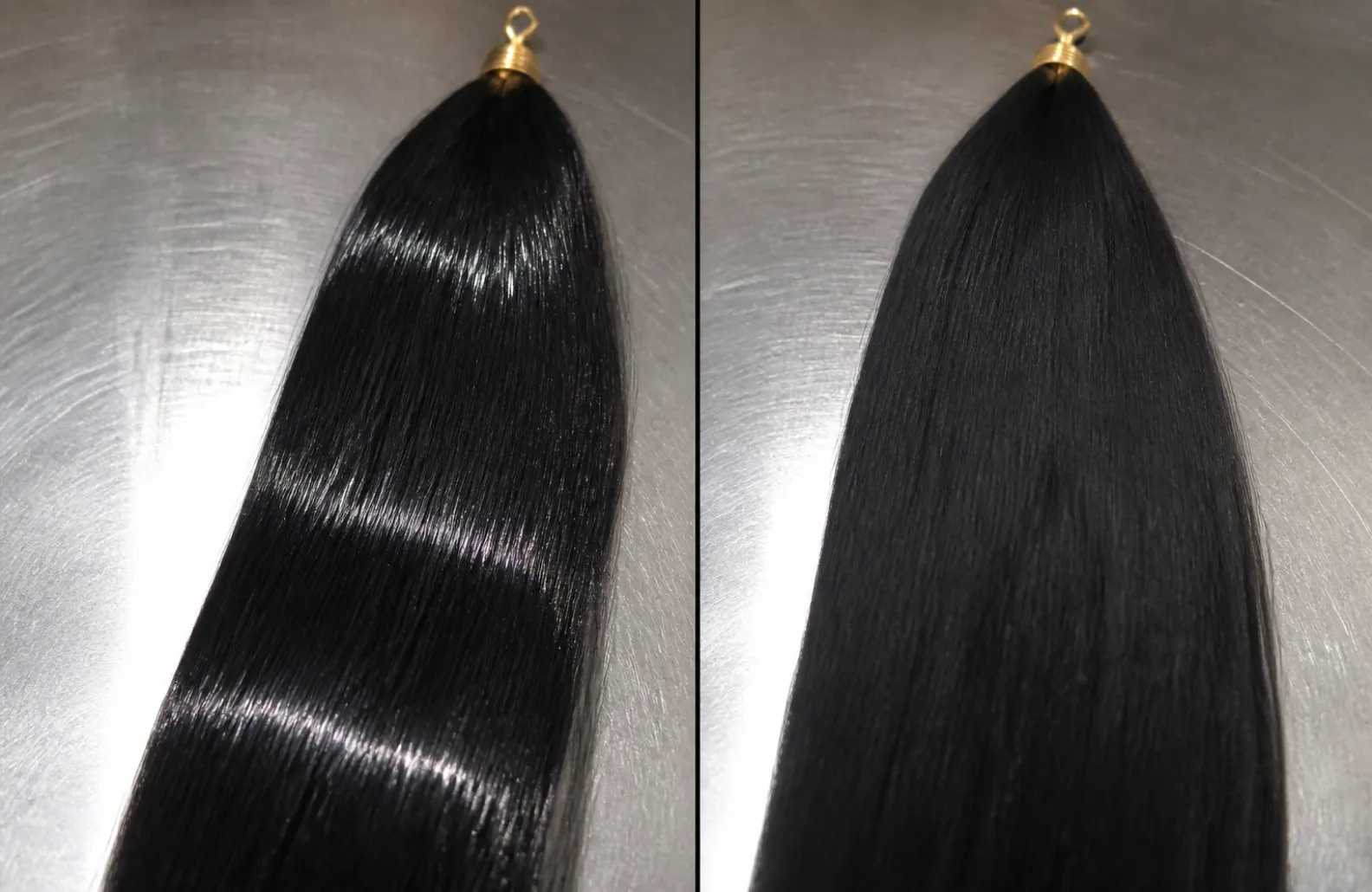
Why a Synthetic Wig Looks Fake
Diagnose before you fix. Six culprits account for nearly every "wiggy" look, and each points to a different solution.
| Problem | What you see | Fix |
|---|---|---|
| Fiber shine | Mirror gloss under indoor light or camera flash | Powder or dry shampoo |
| Hard hairline | A dense, straight edge across the forehead | Plucking, baby hairs, or bangs |
| No scalp at the part | A solid wall of fiber where a part should be | Pluck the parting, add concealer |
| Wrong position or fit | Cap rides high, slips, or bulges | Adjust straps, reposition, wig grip |
| Too-perfect styling | Uniform curl and zero flyaways — "Barbie hair" | Finger-styling, texture, light layering |
| Visible cap or wefts | Tracks or netting show through | Reposition hair, check density at purchase |
Notice what is missing from the list: price. A $40 wig with the shine fixed and the hairline softened beats a $200 wig worn straight out of the box. Technique closes most of the gap.
Fix the Shine First
Synthetic fiber is extruded perfectly smooth, so it reflects light in a way biological hair never does. That uniform gloss is the fastest giveaway, especially in photos. Two products fix it.
Translucent powder. Dust a small amount over the fiber with a large makeup brush, working section by section. The powder scatters the light and leaves a soft, hair-like sheen. Go light — too much reads as chalky, and on dark shades it can grey the color. Dry shampoo. Hold the can 8-10 inches away, spray in short bursts while moving constantly, then distribute with fingers or a wide-tooth comb. A matte-finish formula made for synthetic fiber works best. Both fixes last until the next wash and take under five minutes.
Fix the Hairline
People read a hairline before they read anything else. A dense, straight front edge announces the wig instantly, and three techniques soften it.
Pluck it — lightly
Secure the wig on a mannequin head, section the front hair with a rat-tail comb, and remove a few strands at a time with slanted tweezers, working just behind the front edge. Step back every minute and check. The goal is an irregular, graduated edge like natural regrowth, and plucking is permanent, so under-pluck rather than over-pluck. If the wig already has a pre-plucked hairline, leave it alone — a quality lace front wig is designed to be worn without modification, and heavy plucking only thins a hairline that was already right.
Add baby hairs
Trim a few short, wispy strands along the front edge and lay them flat with a small brush. Baby hairs break up the transition from lace to skin and hide minor lace visibility at the same time.
Blend the lace
A touch of concealer or lace tint matched to your skin tone, applied along the part and front edge, erases the visible line between lace and forehead. On a zig-zag or slightly off-center part, the effect is stronger — a perfectly straight middle part is itself a tell, since real parts wander.
Fix the Fit and Position
A wig that sits a centimeter too high or slides during the day will read as a wig regardless of fiber quality. Measure your head circumference before buying, adjust the internal straps until the cap is snug without pressure, and position the front edge at your natural hairline — not above it, not over your ears. If the wig still shifts, a velvet wig grip band adds friction without glue. For buyers who want security with none of the adhesive routine, a glueless wig with an elastic band and combs solves fit on its own, which is why the category keeps growing.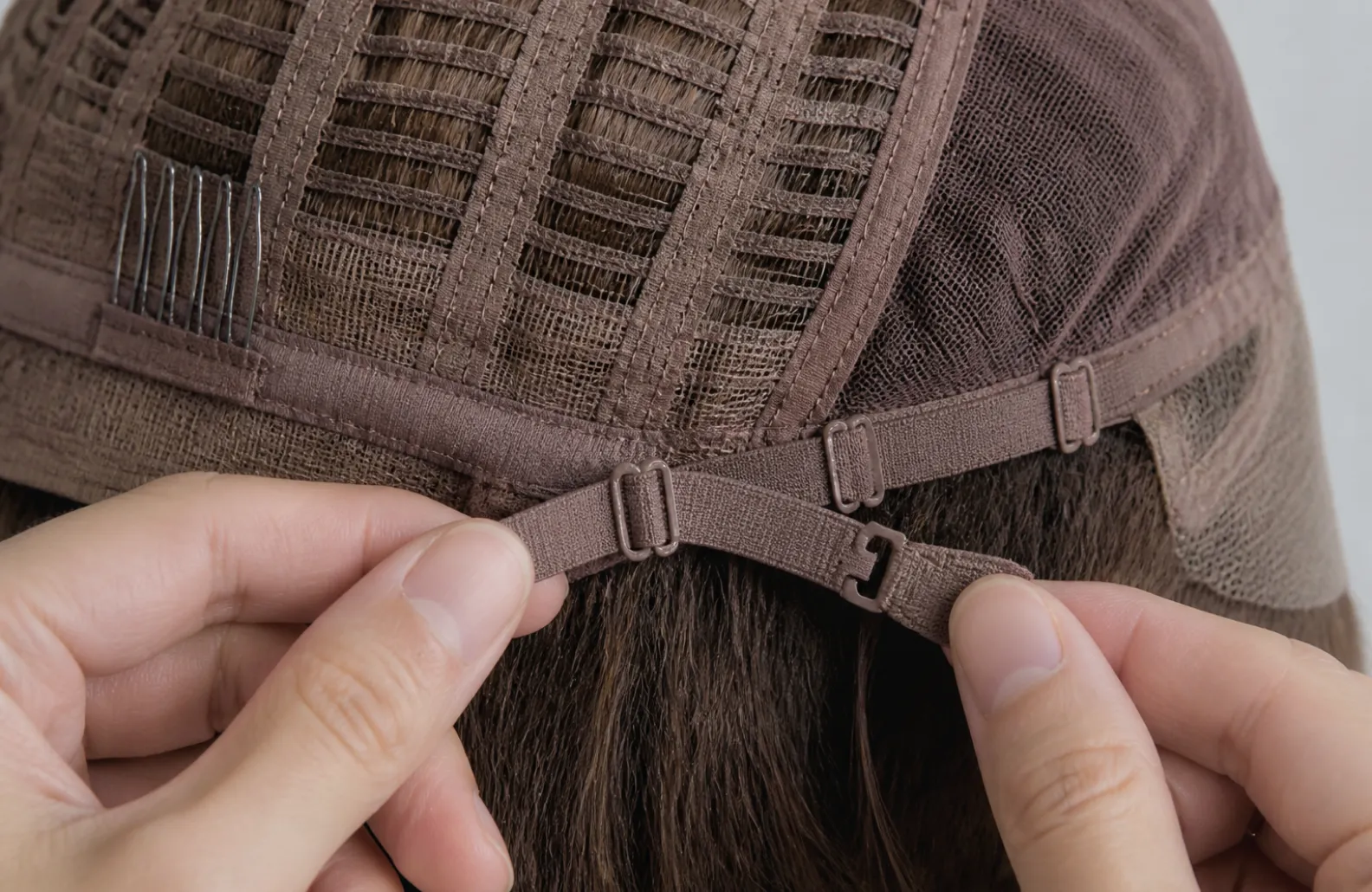
Fix the Part and Density
Real hair shows scalp at the part. Many wigs pack so much fiber into the top that the part disappears entirely, and no amount of styling compensates. Pluck a few strands along the parting line to open it slightly, then press concealer into the part to mimic scalp. If the whole wig feels too dense, a stylist can remove bulk with thinning shears — this is a job for a professional, since thinning shears in untrained hands leave visible gaps. When buying, fine-to-medium density gives the most natural result for daily wear; maximum density suits stage and costume looks, where drama is the point.
Style It Like Real Hair
Perfect uniformity is the last tell. Real hair has irregular curl, slight frizz at the canopy, and movement when you walk. Finger-style the wig instead of brushing it into place, break up uniform curl clumps, and pull a few face-framing strands loose. Light, face-framing layers cut by a stylist add the movement that boxed wigs lack. On heat-resistant fiber, a low-heat pass can soften a too-perfect wave — stay under about 180°C (350°F) and confirm the fiber grade first. Standard synthetic fiber takes no heat at all, and one hot tool session ends the experiment permanently.
Choose a Wig That Needs Less Fixing
The easiest realism upgrade happens at purchase, not after. Four buying decisions do most of the work.
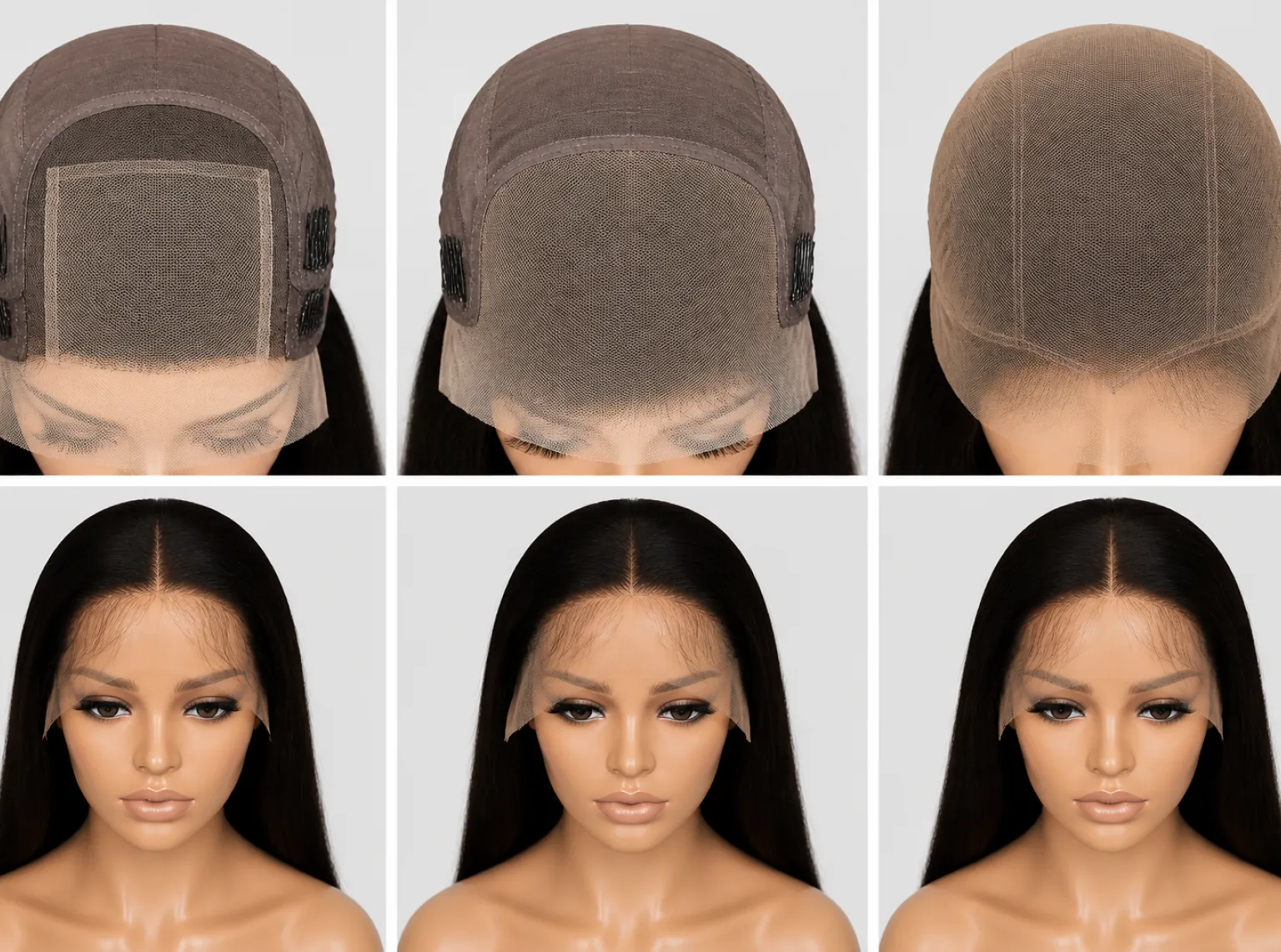
- Pick a lace front. A sheer lace hairline is the single biggest realism feature available at any price. The hair appears to grow from the forehead, which removes the problem the fixes above are patching.
- Or pick bangs. A fringe hides the hairline completely, which is why wigs with bangs are the most forgiving construction for first-time wearers and budget lines alike.
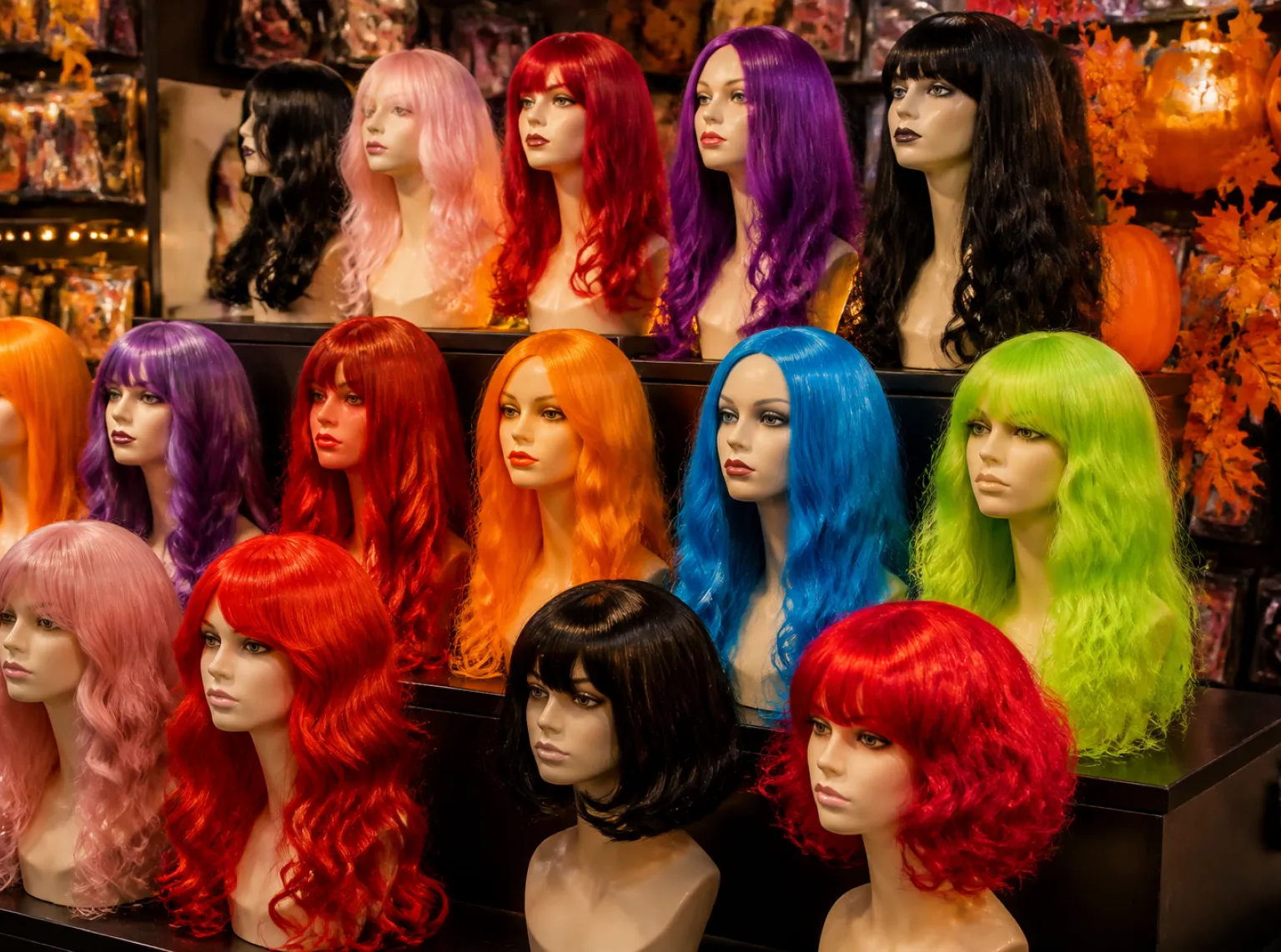
- Choose rooted or blended shades. A flat, single-tone color reads as synthetic even when the fiber is good. Rooted shades and multi-tone blends mimic natural color variation, and any decent colored wig range will include them alongside the fashion shades.
- Stay at medium density for daily wear. High density photographs well and looks wiggy in person. Medium density moves like real hair and shows scalp at the part.
Once the wig is right, keep it right: tangling, frizz, and dullness from poor washing undo every fix above. Our synthetic wig washing guide covers the routine that keeps a natural-looking wig natural.
For Retailers: Stock Wigs That Do Not Need Fixing
If you sell wigs, this article is also a sourcing checklist. Every fix your customer has to perform is a point of friction between them and a five-star review — and "looks fake out of the box" is among the most common complaints in the category. The factories worth partnering with build the fixes in at the spec stage: pre-plucked hairlines, baby hairs on lace fronts, rooted color formulas, medium density defaults, and matte-finish fiber that skips the powder routine entirely. These are specification details, not upgrades, and they cost little to add at production. When you review a wholesale wig catalog or brief a custom OEM/ODM program, ask for them by name. A wig that looks natural in the unboxing video is a wig that gets reordered.
FAQ
Can a synthetic wig actually look natural?
Yes. Modern synthetic fiber on a lace front cap, at medium density, in a rooted shade, passes in normal daily wear. The remaining gap comes from shine, a hard hairline, and poor fit — all fixable with the techniques above. Fiber quality sets the ceiling, but technique decides how close you get to it.
How do I make my synthetic wig less shiny?
Dust translucent powder over the fiber with a large makeup brush, or spray matte dry shampoo from 8-10 inches away and distribute it with your fingers. Both scatter the light that creates the plastic gloss. Apply lightly — heavy powder dulls the color instead of the shine.
Do I need to pluck my wig's hairline?
Only if it comes dense and straight-edged. Pluck a few strands at a time just behind the front edge and check your progress constantly, since plucking cannot be undone. If the wig arrived pre-plucked with baby hairs, it needs no modification — over-plucking a good hairline creates bald patches.
What wig cap looks most natural?
A lace front offers the most natural hairline at mainstream prices, since the hair appears to grow from your skin. Full lace and hand-tied caps go further, allowing parting anywhere and scalp-like realism across the whole crown, at a higher cost. For a budget option, any cap paired with bangs hides the hairline completely.
What density looks most natural?
Fine to medium density, roughly what natural hair shows at rest. Maximum-density wigs hide all scalp at the part and move as one solid piece, which reads as a wig immediately in person, whatever the product photos promised.
Can you make a cheap wig look natural?
Largely, yes. Fixing shine with powder, softening the hairline, positioning the cap correctly, and finger-styling for texture close most of the realism gap, and a stylist's trim handles the rest. The limit is fiber quality — very cheap fiber tangles and frizzes quickly, and no technique holds it natural for long.
Why does my wig look fake in photos but fine in person?
Flash and harsh lighting amplify fiber shine, the main in-person fixes don't always survive the camera. Apply powder or dry shampoo before shooting, avoid direct flash, and check the hairline under the actual lighting you will be photographed in.
-

Raysman
Synthetic Wig Manufacturer
Raysman is a Zhejiang-based synthetic wig manufacturer specializing in party, costume, and fashion color wigs — producing over one million pieces a year from our 10,000 m² Longyou facility. We are BSCI, ISO 9001, and OEKO-TEX Standard 100 certified, and a designated supplier to Disney and Walmart.