
The commercial viability of any wig brand, regional distributor, or salon network relies entirely on the structural integrity of its supply chain. The global wig manufacturing sector is highly concentrated, with the vast majority of polymer extrusion, material processing, and cap assembly occurring within Asian industrial hubs. For B2B procurement officers, selecting a supplier requires moving beyond superficial evaluations of standalone sample units. A perfect sample means nothing if the factory lacks the scalable infrastructure to maintain that exact specification across a 5,000-unit bulk order. This technical guide provides a standardized auditing framework for vetting commercial wig suppliers, distinguishing genuine manufacturers from trading intermediaries, and establishing secure OEM/ODM partnerships.
Distinguishing Direct Manufacturers from Trading Companies
The primary hazard in offshore B2B procurement is the prevalence of trading companies masking themselves as direct manufacturers. Trading entities act as middlemen, aggregating orders and subcontracting the actual production to various independent workshops. This multi-tier subcontracting destroys quality control, inflates unit costs, and makes technical customization nearly impossible.
Procurement teams can execute several diagnostic tests to identify a true manufacturer:
- Technical Literacy Verification: A direct factory employs production engineers. When you request modifications to a sample, ask specific technical questions. Ask about the specific gravity of the fiber, the denier count of the lace matrix, or the ventilation gradient at the hairline. Trading company representatives typically default to generic affirmative responses ("Yes, we can do that") and must consult a third party before providing technical specifics. Factory representatives can immediately discuss production parameters and material limitations.
- Minimum Order Quantity (MOQ) Logic: Trading companies often require higher MOQs because they must meet the minimum thresholds of their subcontracted factories while covering their own margins. Conversely, they might offer suspiciously low MOQs for generic, off-the-shelf stock because they are simply liquidating existing wholesale inventory rather than manufacturing to order. A genuine manufacturer offers logical MOQ structures tied directly to raw material procurement blocks and production line setup costs.
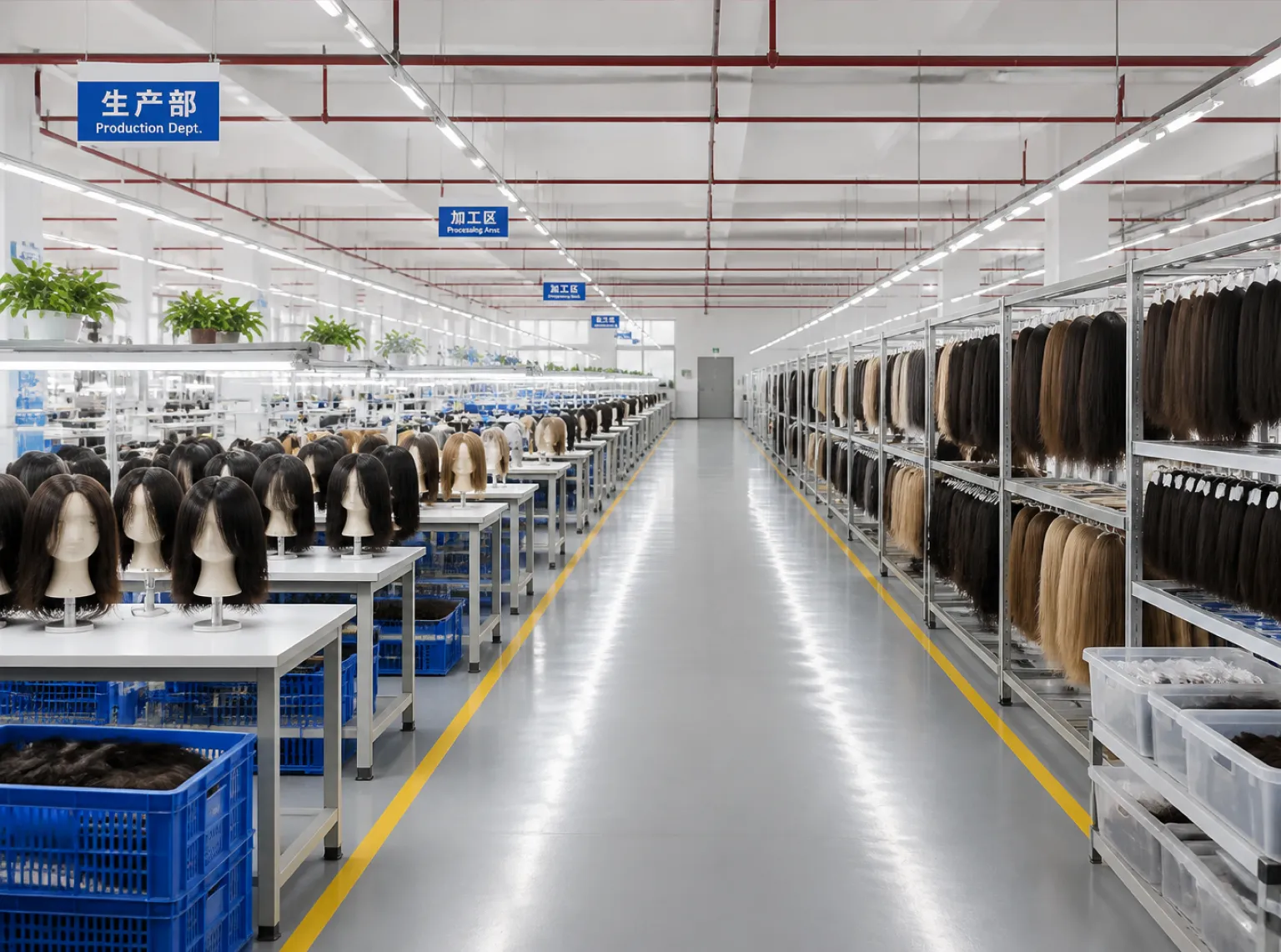
- Facility Documentation and Live Audits: Request live video walk-throughs of the facility during operating hours. A legitimate factory will willingly demonstrate its fiber processing zones, wefting machines, hand-ventilation stations, and quality control (QC) inspection lines. Trading companies will typically provide static, highly polished corporate videos or refuse live technical audits.
The "Bait and Switch" Risk: Sample vs. Bulk Consistency
The most frequent failure point in B2B wig procurement is the divergence in quality between the approved prototype and the final bulk shipment. This "bait and switch" phenomenon rarely occurs because of intentional malice; rather, it is a symptom of poor capacity management.
During peak seasonal demand (such as the months leading up to Halloween or major retail holidays), factories operating at maximum capacity may subcontract overflow orders to smaller, unverified secondary workshops to meet delivery deadlines. These secondary workshops lack the standardized QC protocols of the primary facility. To prevent this, procurement contracts must include explicit clauses prohibiting unauthorized subcontracting. Furthermore, buyers should mandate "Top of Production" (TOP) samples. A TOP sample is pulled directly from the first run of the actual bulk production line, rather than being a custom-made prototype from the R&D department. Bulk shipping should only authorize upon the approval of the TOP sample.
Auditing Technical Capabilities: Cap Construction and Ventilation
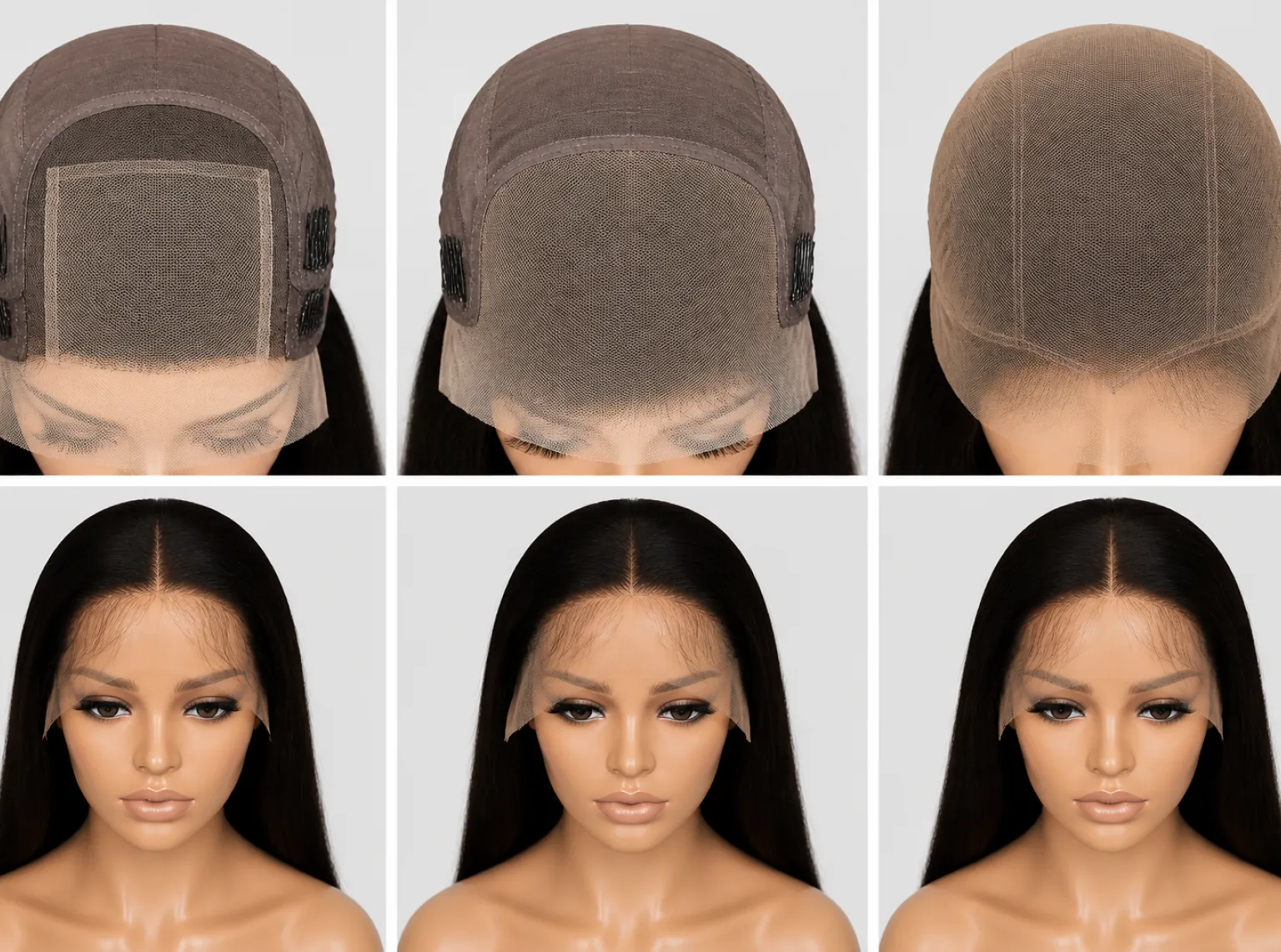
The sophistication of a wig manufacturer is most visible in its cap construction and hand-tying (ventilation) techniques. These elements dictate the unit's retail lifespan, structural stability, and visual realism.
Ventilation Precision and Knot Management
Hand-tied units, particularly full lace wigs and lace frontals, require meticulous knotting. Factories utilize different knotting techniques based on the desired durability and realism. Single knots are virtually invisible but less secure. Double knots are highly durable but visually prominent, creating an artificial grid appearance on the scalp.
Premium manufacturers employ a hybrid approach: single-split knots at the front hairline (the first 0.5 to 1 inch) to ensure absolute invisibility against the forehead, transitioning to double knots across the crown and nape to provide the mechanical strength necessary for daily brushing and styling. When vetting a supplier, invert the sample cap and examine the knot transition zone under magnification. Inconsistent knotting or the use of double knots at the extreme front edge indicates a lack of skilled labor or rushed production metrics.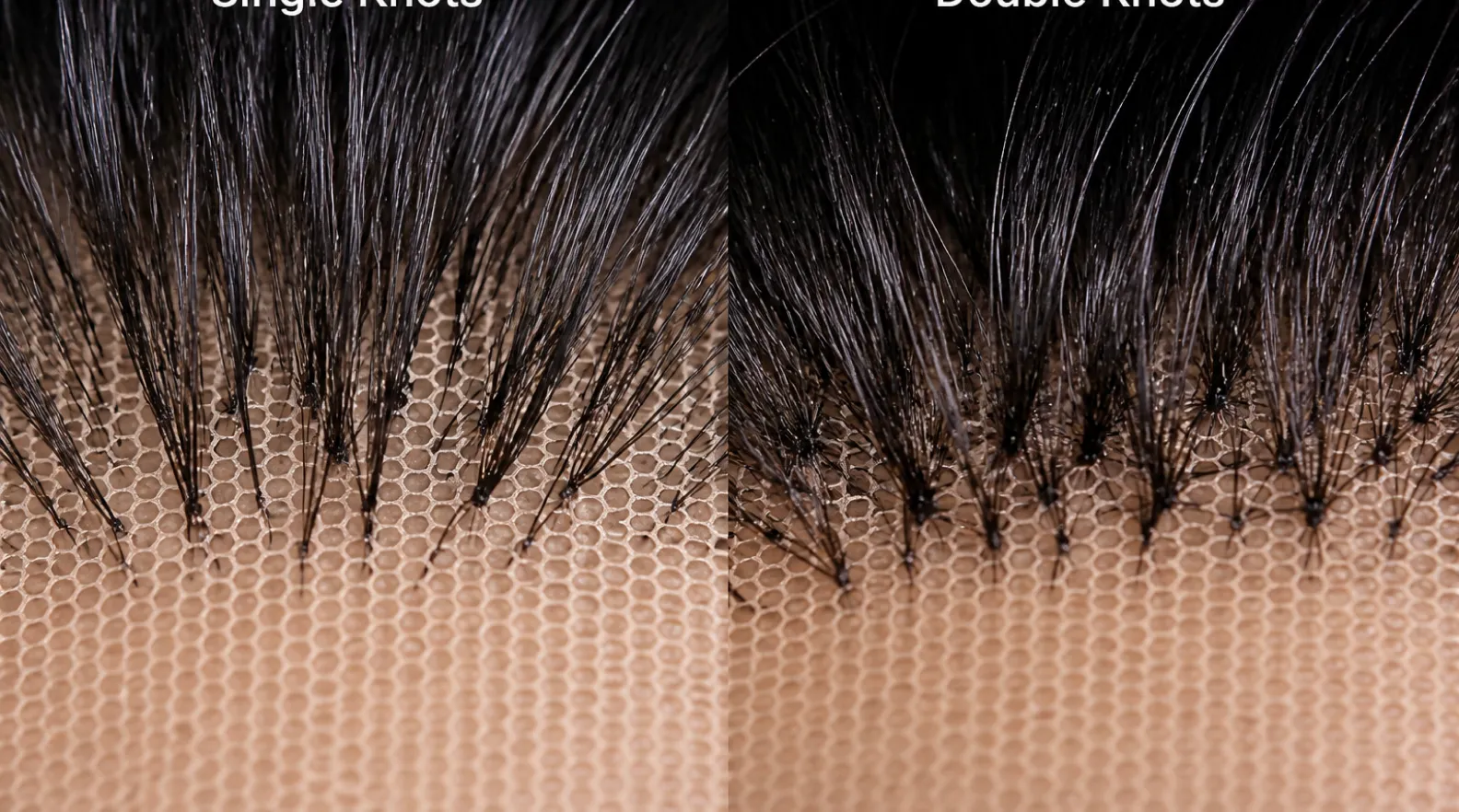
Return Hair Management
During the hand-tying process, a single strand of hair is folded into a "U" shape and knotted onto the lace. The shorter end of the fold is known as the "return hair" or "beard." Inferior factories fail to manage this return hair properly, leaving it too long (exceeding 2 inches). This long return hair interlocks with the main hair shaft, causing severe matting and tangling at the root base within weeks of wear. An audited factory will demonstrate strict protocols for trimming and chemically pressing return hairs flat against the cap interior.
Material Compliance and Chemical Safety Standards
Wig manufacturing involves extensive chemical processing, including acid baths for cuticle stripping (in human hair), polymer dye sublimation (in synthetic fiber), and polyurethane curing for cap grips. B2B buyers importing into North America or the European Union carry the legal liability for product safety compliance.
| Compliance Standard | Regulatory Focus | Supplier Audit Requirement |
|---|---|---|
| Flammability (US CPSC / EU EN 71-2) | Burn rate and self-extinguishing properties, critical for costume and synthetic units. | Must provide independent lab testing certificates for raw modacrylic and PET fibers utilized. |
| OEKO-TEX Standard 100 | Absence of harmful substances (heavy metals, toxic dyes, formaldehyde). | Verify certification for all cap materials, lace matrices, and synthetic dyes that contact the scalp. |
| Colorfastness Testing | Resistance to dye bleeding under UV exposure or perspiration. | Request standard ISO colorfastness test results, ensuring dyes will not stain skin or clothing. |
Never assume compliance based on a factory's verbal assurance. Request documented, verifiable laboratory reports from recognized third-party testing agencies (such as SGS or Intertek) matching the specific SKU or material batch you are purchasing.
OEM vs. ODM: Defining Private Label Capabilities
Brands require different levels of manufacturing support depending on their internal R&D infrastructure. A capable factory must clearly define its OEM and ODM service parameters.
Original Equipment Manufacturing (OEM): The buyer provides the exact technical specifications, blueprints, custom cap measurements, and fiber requirements. The factory acts strictly as the execution arm. When vetting for OEM, focus on precision execution, strict adherence to tolerances, and intellectual property (IP) protection protocols. Will they sign a Non-Disclosure Agreement (NDA) regarding your proprietary cap designs?
Original Design Manufacturing (ODM): The factory utilizes its own R&D team to develop new wig styles, color blends, and cap technologies, which buyers can then select and brand as their own (private labeling). When vetting for ODM, evaluate the factory's trend forecasting ability. Do they release new collections quarterly? Can they accurately replicate complex balayage or root-fade color formulas based solely on a photograph?
Evaluating Lead Times and Logistics Infrastructure
Supply chain velocity is a competitive advantage. A factory with excellent quality but volatile lead times will destroy a brand's cash flow and inventory turnover ratios. Standard industry metrics dictate that prototype sampling should conclude within 5 to 10 days. Standard bulk production runs (1,000 to 3,000 units) should average 30 to 45 days, dependent on the ratio of machine-wefted to hand-tied components.
During the vetting process, analyze their logistics network. Do they have established relationships with primary freight forwarders for both expedited air cargo and economical LCL (Less than Container Load) ocean freight? Factories with sophisticated logistics operations will proactively provide dimensional weight (DIM weight) calculations prior to production completion, allowing procurement teams to accurately forecast landed costs.
Raysman B2B Manufacturing Standards
Raysman operates as a dedicated, direct-to-B2B manufacturer, engineering complete wig supply chains for global retail brands and distributors. We do not subcontract bulk orders. Every unit undergoes processing, assembly, and strict three-tier QC inspection within our controlled facilities. We provide full transparency regarding polymer sourcing, utilizing inherently flame-retardant modacrylics and high-temperature PET fibers accompanied by requisite safety certifications. Whether your operation requires precise custom OEM manufacturing based on proprietary blueprints or rapid deployment of trend-driven ODM private label units, our infrastructure supports scalable, consistent output. Procurement teams can initiate technical consultations, request factory audits, and order TOP samples through our global wholesale program.
-

Raysman
Synthetic Wig Manufacturer
Raysman is a Zhejiang-based synthetic wig manufacturer specializing in party, costume, and fashion color wigs — producing over one million pieces a year from our 10,000 m² Longyou facility. We are BSCI, ISO 9001, and OEKO-TEX Standard 100 certified, and a designated supplier to Disney and Walmart.