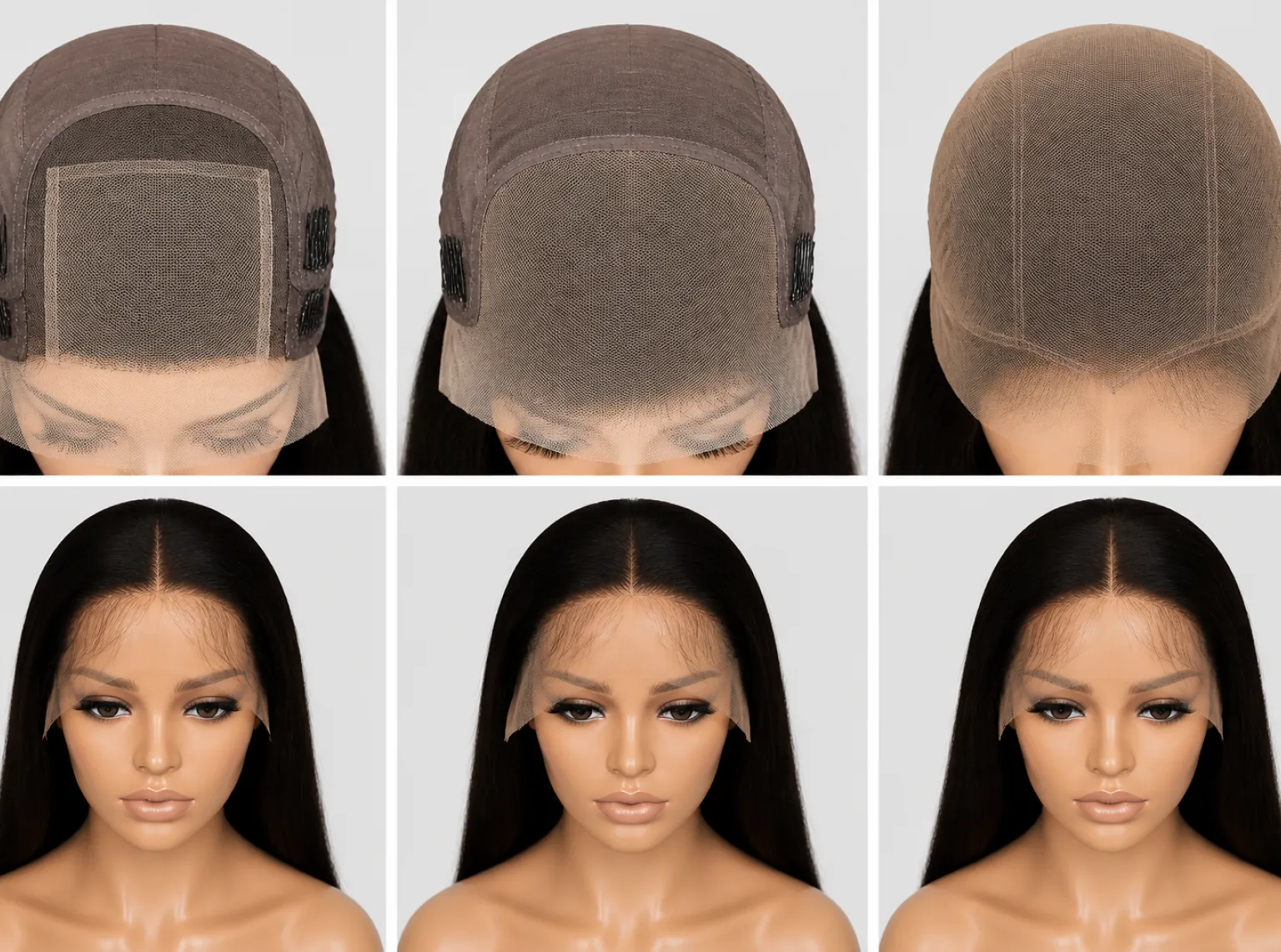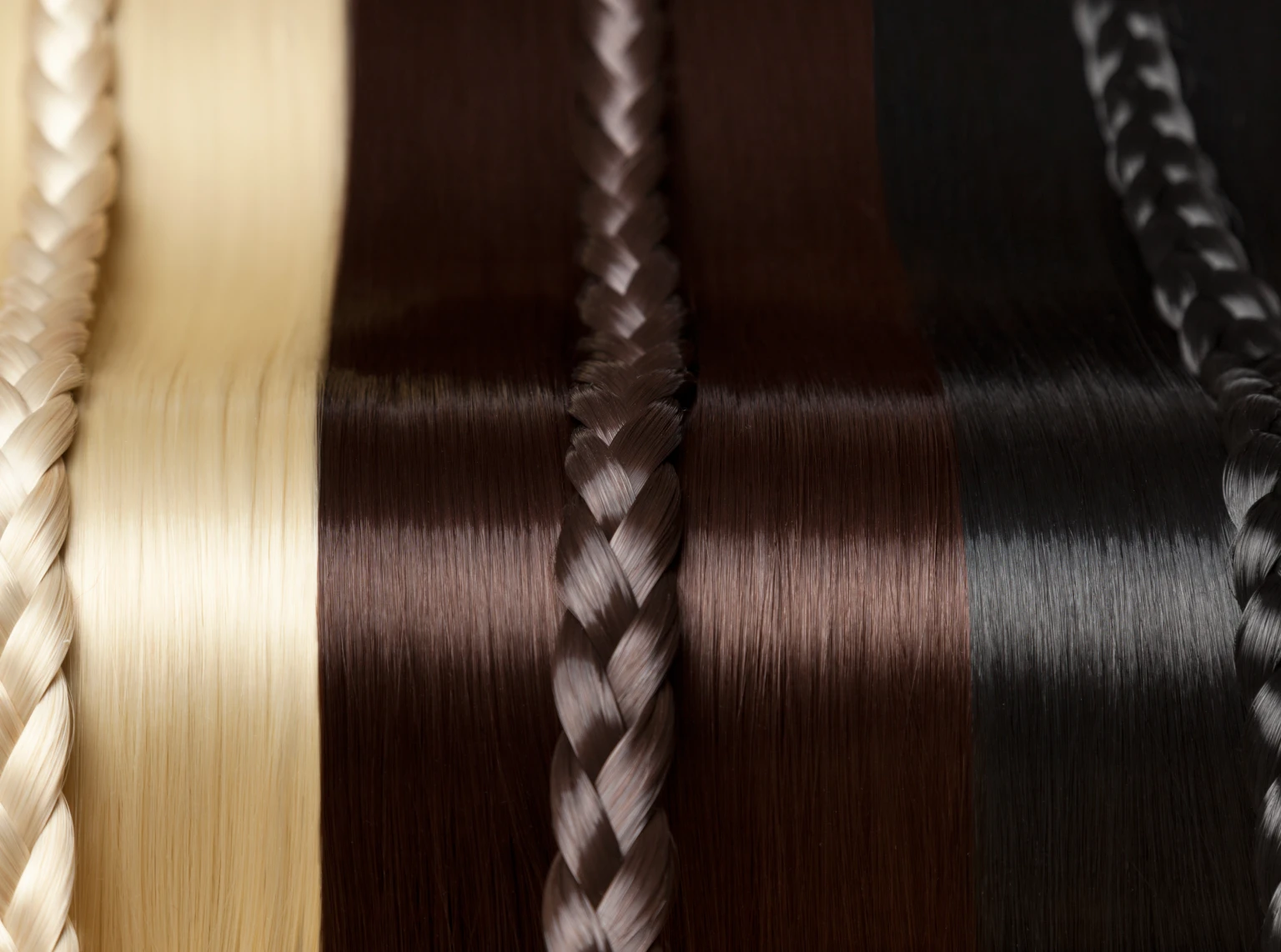

The structural foundation of any commercial wig inventory begins with cap sizing and mechanical fit. For B2B buyers, regional distributors, and clinical procurement teams, sourcing inventory based on a generic "one-size-fits-all" assumption guarantees high retail return rates and poor brand retention. The global wig manufacturing sector standardizes cap architecture utilizing precise geometric measurements and structural elastane matrices. Purchasing specialized units, such as glueless wigs or medical cranial prosthetics, requires strict adherence to these dimensional tolerances, as these units rely entirely on tension rather than chemical adhesives for security. This technical guide outlines the industrial measurement standards, cap stretch engineering, and demographic sizing ratios required for wholesale wig procurement.
The Financial Risk of Generic Cap Sourcing
Wig cap sizing directly dictates the mechanical performance of the unit. A cap that is dimensionally too small will exert excessive tension across the wearer's occipital bone and temples, causing severe friction, headaches, and premature tearing of the delicate lace matrix. Conversely, a cap that is too large will fold, buckle, and slide laterally during normal wear, completely breaking the illusion of a natural hairline.
In wholesale operations, cap sizing directly impacts the bottom line. Retail consumers encountering sizing failures rarely blame their own head dimensions; they attribute the failure to poor manufacturing quality. Distributors who fail to stock a calibrated ratio of Petite, Average, and Large caps alienate approximately 20% of the consumer base. Procurement contracts must explicitly detail the dimensional requirements for every SKU in a bulk order.
Standardized Circumference Metrics: Petite, Average, and Large
The primary baseline for wig cap construction is the total circumference of the wearer's head, measured along the hairline from the front nape, over the ears, across the occipital bone, and back to the starting point. Industrial wig blocks (the rigid molds used during factory ventilation and wefting) are carved to specific inch-based parameters.
- Petite Cap Sizing (21.0 - 21.5 inches): Engineered for smaller head anatomies and juvenile demographics. Petite caps utilize shorter machine wefts and reduced lace depth to prevent the ear tabs from resting directly on the wearer's cartilage. At the retail level, approximately 5% to 10% of standard consumers require a petite fit.
- Average Cap Sizing (22.0 - 22.5 inches): The dominant industry standard. If a B2B purchase order omits sizing specifications, the factory defaults to the 22.5-inch average mold. This dimension accommodates roughly 80% to 85% of adult female consumers globally, aided by the mechanical stretch built into the cap base.
- Large Cap Sizing (23.0 - 23.5 inches): Designed for larger head anatomies, clients wearing voluminous natural hair braided flat underneath the unit, or specialized theatrical applications. Distributing full lace wigs to diverse urban demographics often requires a higher ratio of large caps to accommodate thick protective styling beneath the wig.
The Six-Point Measurement Axis for OEM Custom Production
While circumference serves as the baseline for generic retail stock, precise custom OEM manufacturing requires a multi-dimensional spatial blueprint. When B2B buyers order specialized medical units or custom private label designs, they must submit a standardized six-point measurement axis to the factory.
1. Circumference: The total perimeter around the head, tracking the hairline.
2. Front to Nape: Measured from the exact center of the anterior hairline, straight back over the crown, ending at the posterior hairline at the nape of the neck. This dimension determines the longitudinal tension of the cap. If this measurement is shorted during manufacturing, the wig will slide backward off the forehead.
3. Ear to Ear Across Forehead: Measured from the front of one ear, tracking across the front hairline to the front of the opposite ear. This establishes the width of the frontal lace matrix and the exact placement of the structural ear tabs.
4. Ear to Ear Over Top: Measured from the top of one ear cartilage, directly over the apex of the skull, to the top of the opposite ear. This establishes the required depth and volumetric curve of the central dome.
5. Temple to Temple Around Back: Measured from one temple point, wrapping around the occipital bone at the back of the head, to the opposite temple. This dictates the tension requirement for the rear adjustable strap.
6. Nape of Neck: The width of the hairline at the base of the neck. This determines how wide the factory must construct the rear elastic band and where to place the lower securing combs.
| Measurement Axis | Petite Target (Inches) | Average Target (Inches) | Large Target (Inches) |
|---|---|---|---|
| Circumference | 21.0 - 21.5 | 22.0 - 22.5 | 23.0 - 23.5 |
| Front to Nape | 13.5 - 14.0 | 14.0 - 14.5 | 15.0 - 15.5 |
| Ear to Ear Across Forehead | 11.0 | 11.5 | 12.0 |
| Ear to Ear Over Top | 12.0 - 12.5 | 12.5 - 13.0 | 13.5 - 14.0 |
| Temple to Temple (Back) | 14.0 | 14.5 - 15.0 | 15.5 |
| Nape Width | 4.5 | 5.0 | 5.5 - 6.0 |
Stretch Matrix Engineering and Material Science
Factories do not expect a 22.5-inch average cap to fit exactly 22.5 inches without tolerance. Modern cap architecture integrates elastane polymers and stretch mesh to provide a structural tolerance of roughly 0.5 to 1.0 inch. This elasticity allows a single SKU to cover a broader range of the bell curve.
However, B2B buyers must audit the quality of this stretch material. Inferior caps utilize low-denier spandex that suffers from mechanical fatigue; after several weeks of wear, the elastane breaks down, and the cap permanently stretches out, losing its security. Premium manufacturing utilizes closed-cell stretch mesh that maintains high tensile recovery. The cap must snap back to its original dimensions immediately upon removal.
Furthermore, glueless cap engineering relies on internal piano bands. These are thick, heavy-duty elastic straps anchored laterally across the occipital base, featuring hook-and-loop or bra-strap style adjustment notches. Buyers auditing samples must stretch these bands to maximum tension and verify they do not warp the rear weft tracks or pull the ear tabs backward.
Inventory Ratios for B2B Distribution
For distributors planning bulk inventory without historical sales data, ordering a uniform 1/3 split across all three sizes represents a massive capital error. The industry standard baseline for wholesale container loads is an 80/10/10 split: 80% Average, 10% Petite, and 10% Large.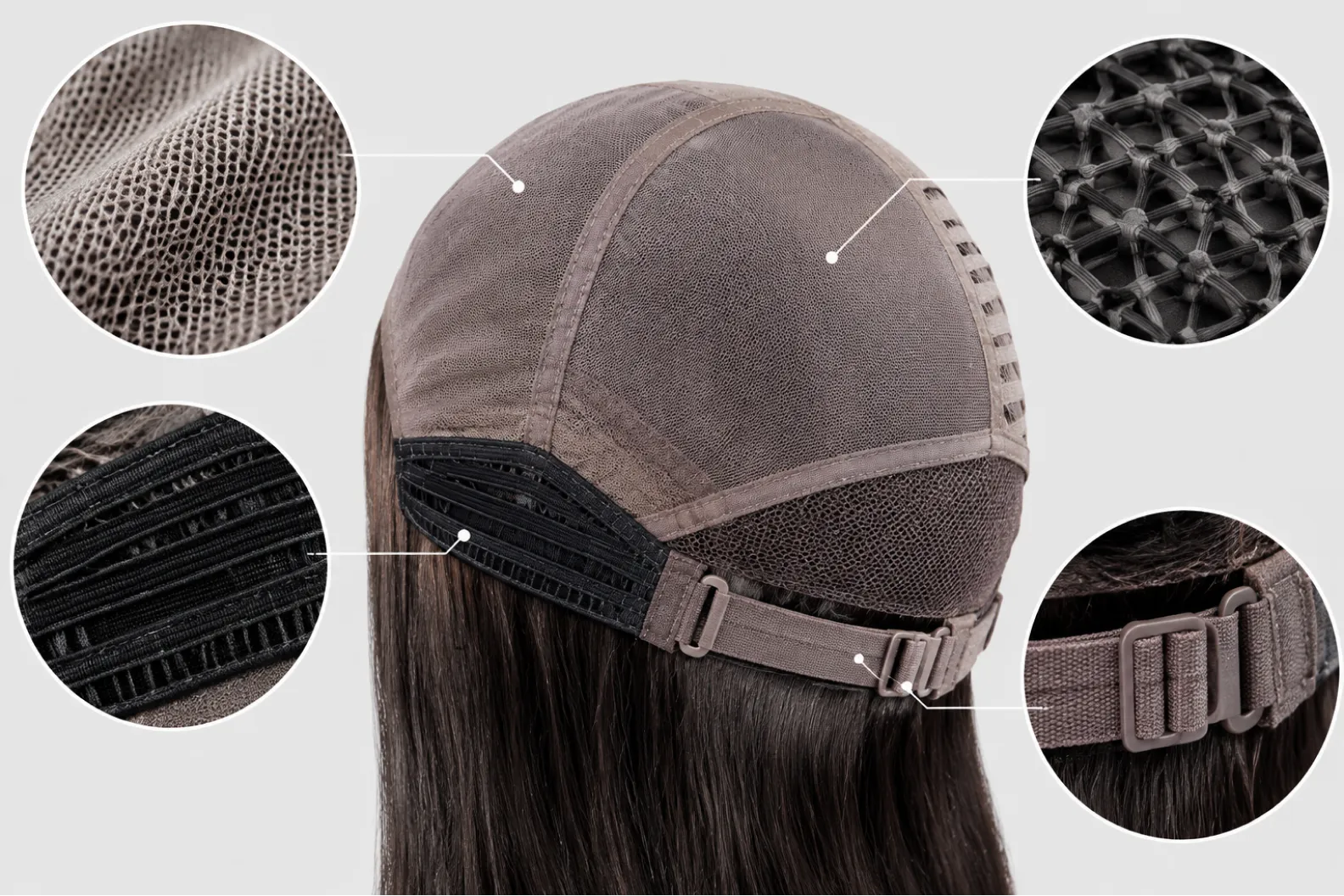
Procurement teams must adjust this ratio based on their target retail demographic. Brands targeting the clinical hair loss sector (alopecia or chemotherapy patients) frequently shift to a 70% Average and 30% Petite split, as the absence of natural hair beneath the cap reduces the necessary volumetric clearance. Conversely, distributors supplying the textured hair market or theatrical sectors should heavily increase their Large cap inventory to accommodate thick braids, cornrows, and wig grips utilized under the unit.
Bonecraft Cap Fabrication Standards
Precision dimensioning forms the core of the Bonecraft manufacturing protocol. We discard generic, high-variance cap molds in favor of mathematically precise CNC-cut stretch matrices. Every bulk order processed through our facility—from high-density lace frontals to specialized cranial prosthetics—integrates premium elastane mesh with high tensile recovery, ensuring the cap maintains its structural grip over an extended retail lifespan. Our engineering team accepts full six-point measurement profiles for strict OEM custom production, allowing brands to cater to specialized medical demographics with absolute accuracy. Procurement teams aiming to standardize their inventory sizing and eliminate fit-based return rates can initiate technical audits and submit size ratio blueprints through our wholesale program.
-

Raysman
Synthetic Wig Manufacturer
Raysman is a Zhejiang-based synthetic wig manufacturer specializing in party, costume, and fashion color wigs — producing over one million pieces a year from our 10,000 m² Longyou facility. We are BSCI, ISO 9001, and OEKO-TEX Standard 100 certified, and a designated supplier to Disney and Walmart.