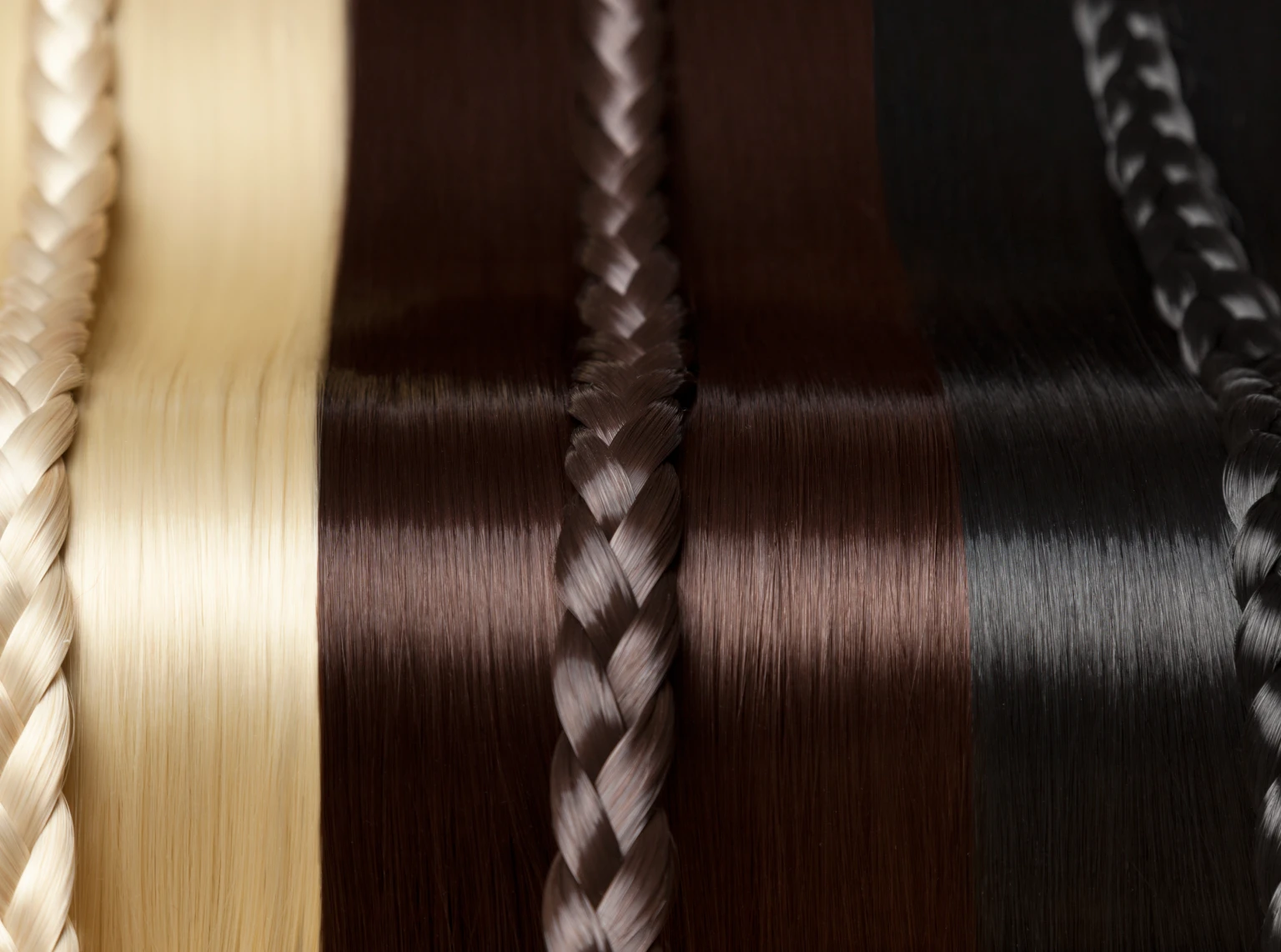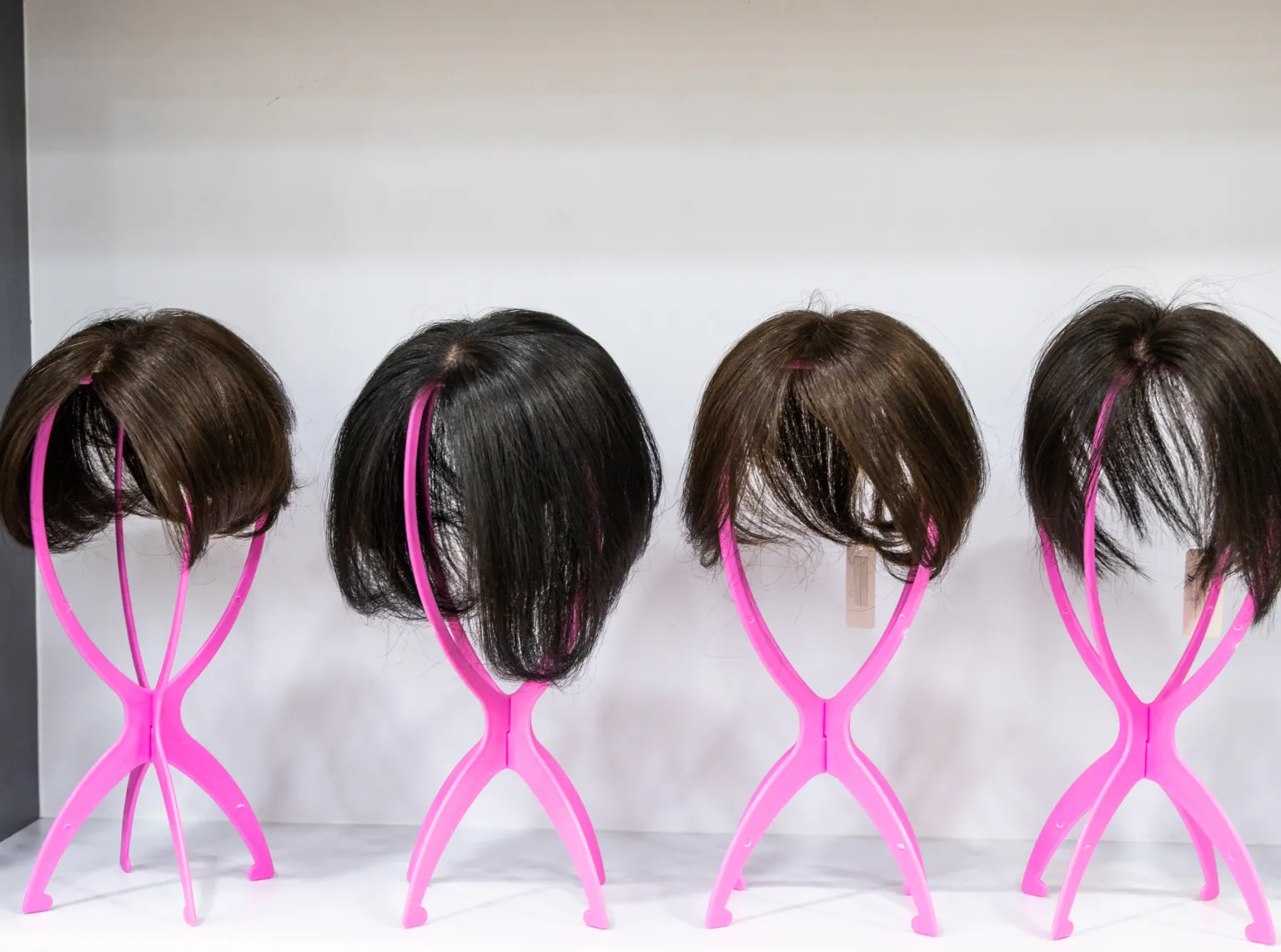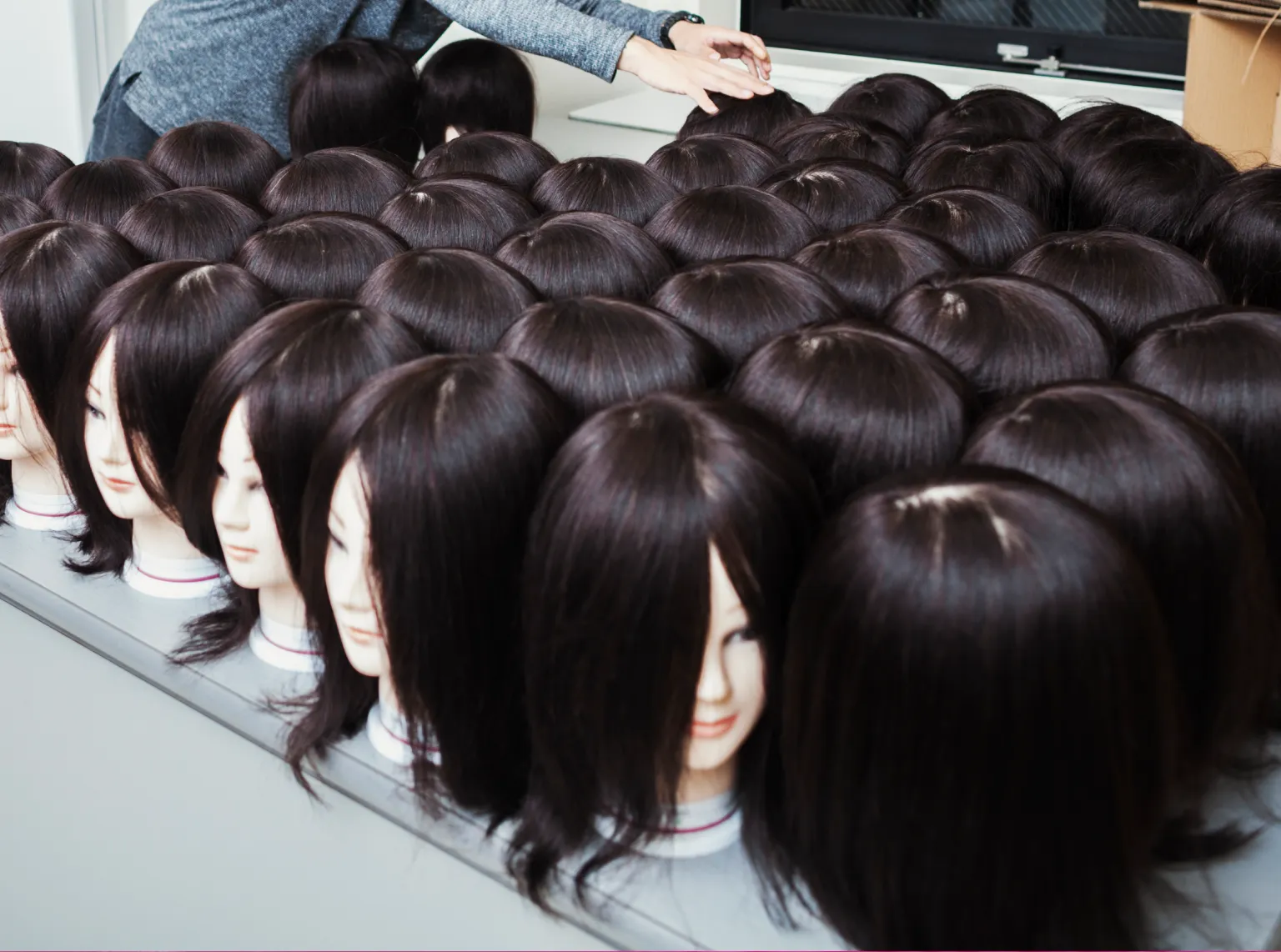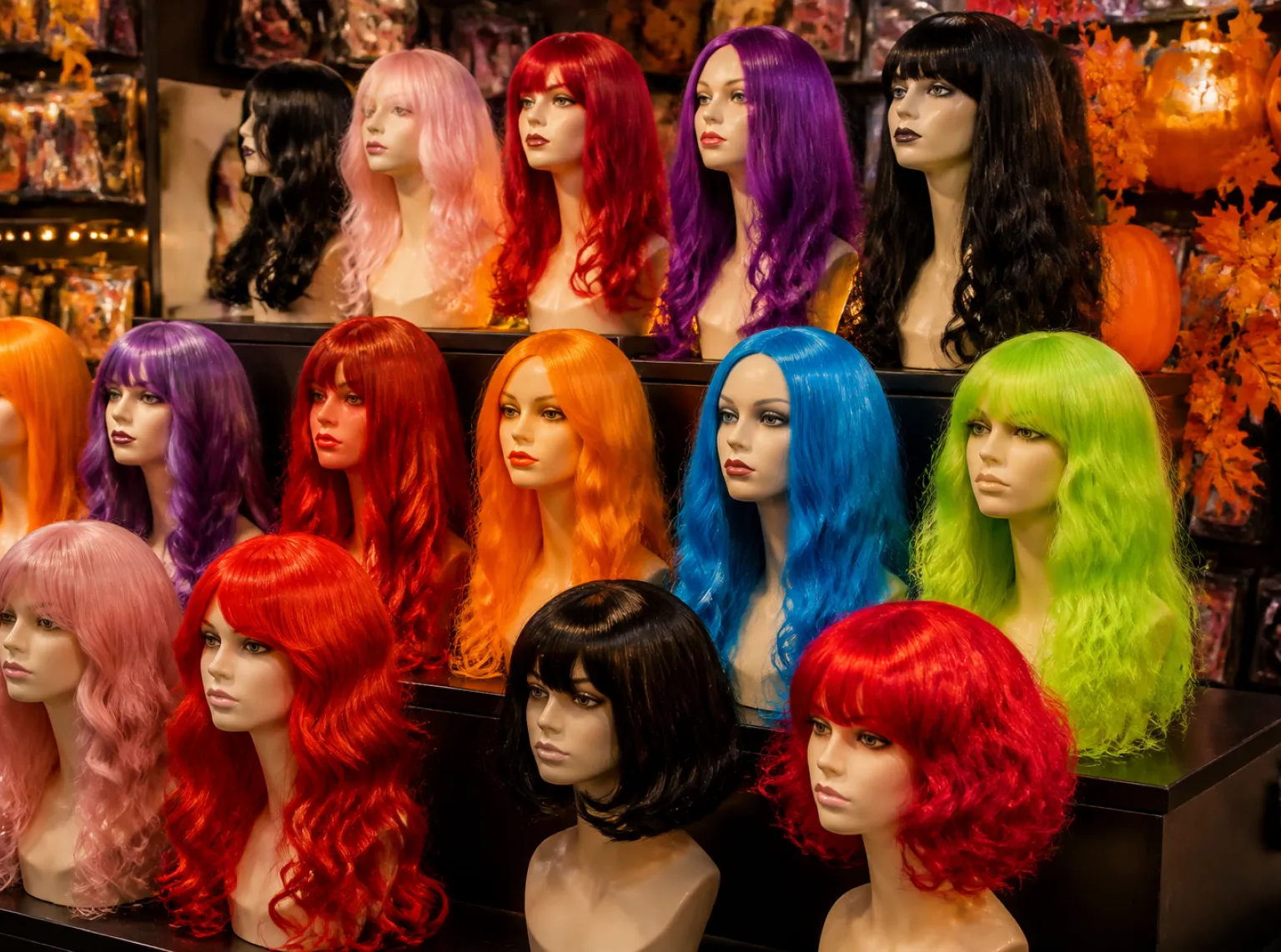

The cap is the part of a wig nobody sees and everybody judges. It sets how real the hairline looks, how the wig parts and styles, how comfortable it is to wear, and how much it costs to make. From the manufacturing side, the cap is usually the biggest lever on price. For a B2B buyer, picking the right construction comes down to three things: the price point you sell at, how natural the front needs to look, and how much skill your customer has to put it on. One point up front: cap construction is independent of fiber, so every option here is built the same way in synthetic as in human hair.
The short answer for buyers: match the cap to the product. Machine-wefted caps suit costume, party and budget lines, where volume and price matter more than a hand-tied hairline. Lace front or glueless lace front suits fashion and retail lines that need a natural front. Full lace, 360 and monofilament suit premium realism and updo styling. Headband and glueless caps suit beginner, wear-and-go retail. Because the construction is independent of the fiber, all of it works in synthetic.
Why the Cap Drives Cost, Realism and Comfort
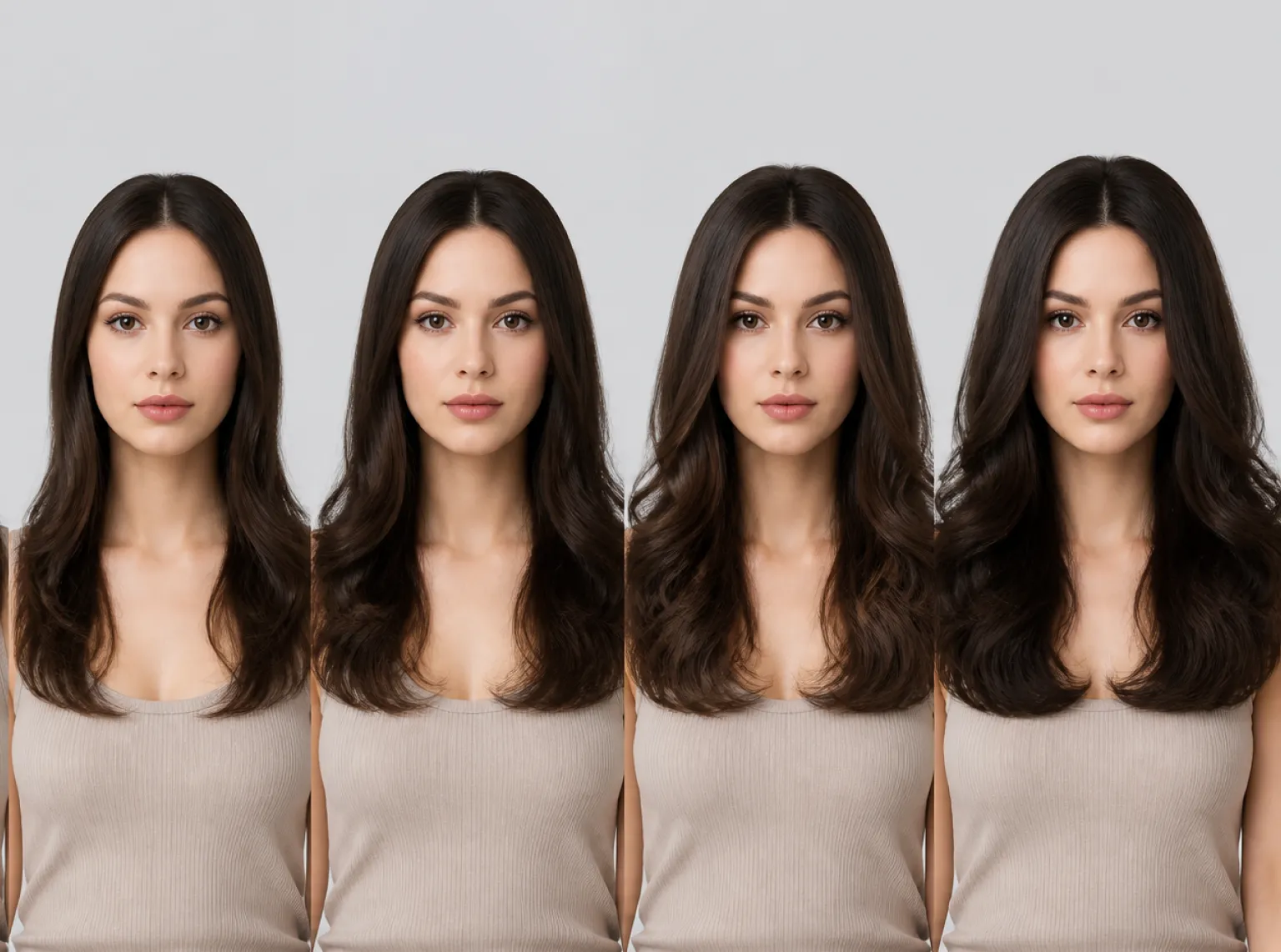
The cap is the base the hair is attached to, and how the hair is attached decides almost everything. Hair sewn onto wefts is fast and cheap, though the wefts show if you part the hair. Hair tied by hand onto sheer lace looks like it grows from the scalp, but it takes far more labor, which is why lace adds cost. More lace means a more natural hairline, more parting freedom and more breathability, along with a higher price and a more delicate cap. Every construction below is a point on that line. The fiber sitting on the cap, whether synthetic or human hair, does not change how the cap is built.
Cap Constructions at a Glance
Here is the full range in one view, ordered roughly from lowest cost to highest. The sections that follow explain each for a buyer.
| Construction | Base | Parting and styling | Install | Cost | Best for |
|---|---|---|---|---|---|
| Machine-wefted | No lace, wefts on a stretch cap | Set style, no real part | Easiest, slip-on | Lowest | Costume, party, budget, volume |
| Headband | Fabric band front, wefted cap | Set style, front covered | Slip-on, no skill | Low | Beginner, wear-and-go retail |
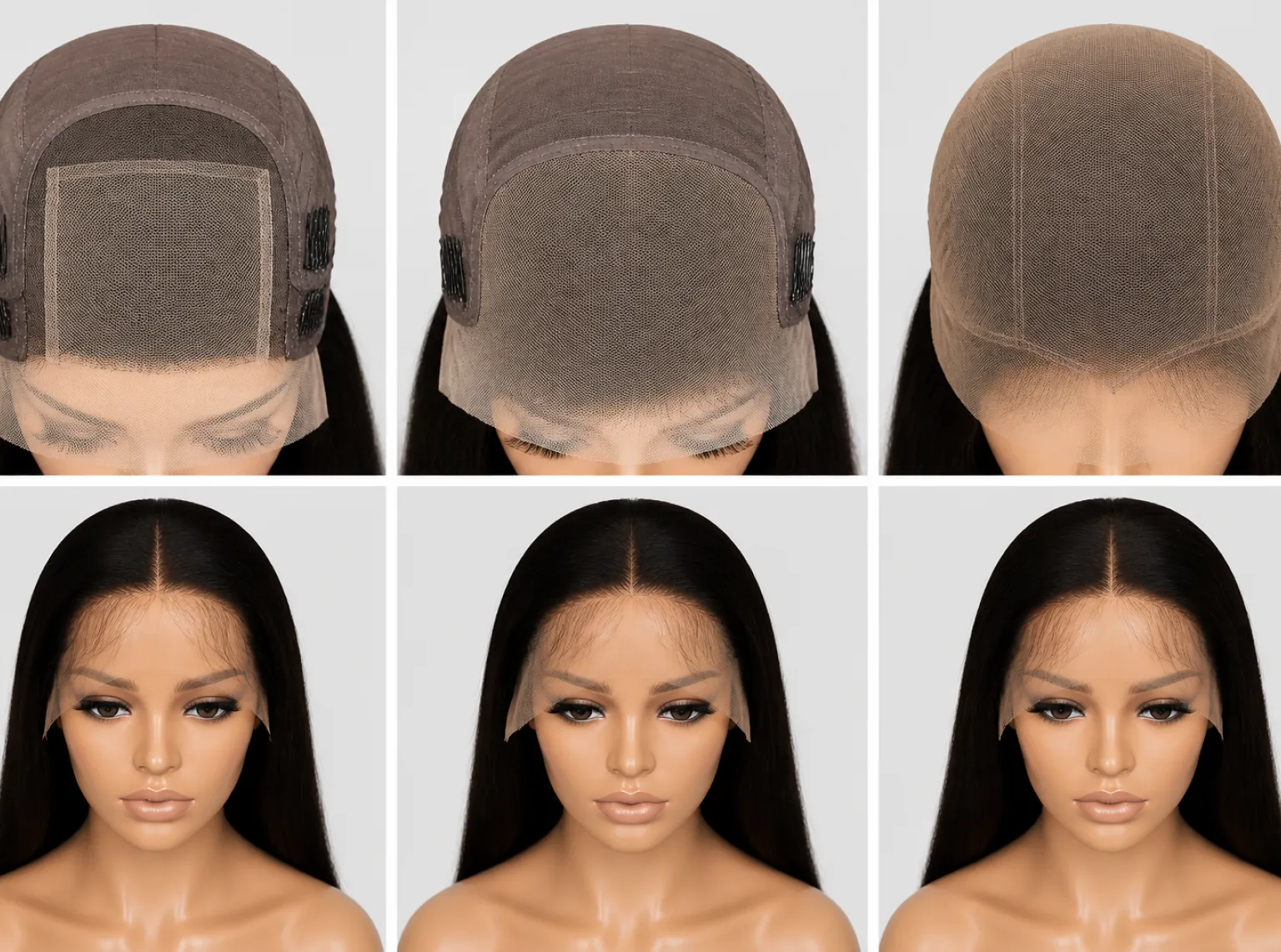
| Closure | Small lace at crown, 4x4 to 6x6 | One part area | Easy, little adhesive | Low to mid | Simple part, beginners, budget |
| Lace front | Lace across front, 13x4 or 13x6 | Part anywhere across front | Moderate, or glueless | Mid | Fashion, retail, natural front |
| 360 lace | Lace around perimeter, wefted center | Front part plus high ponytail | Moderate to high | Mid to high | Ponytail and updo styling |
| Full lace | All lace, hand-tied | Part and style anywhere | Most skill | Highest | Premium realism, salon |
| Monofilament | Mesh at part, hand-tied, often with lace front | Realistic part | Moderate | Mid to high | Realistic scalp, comfort |
Machine-Wefted Caps
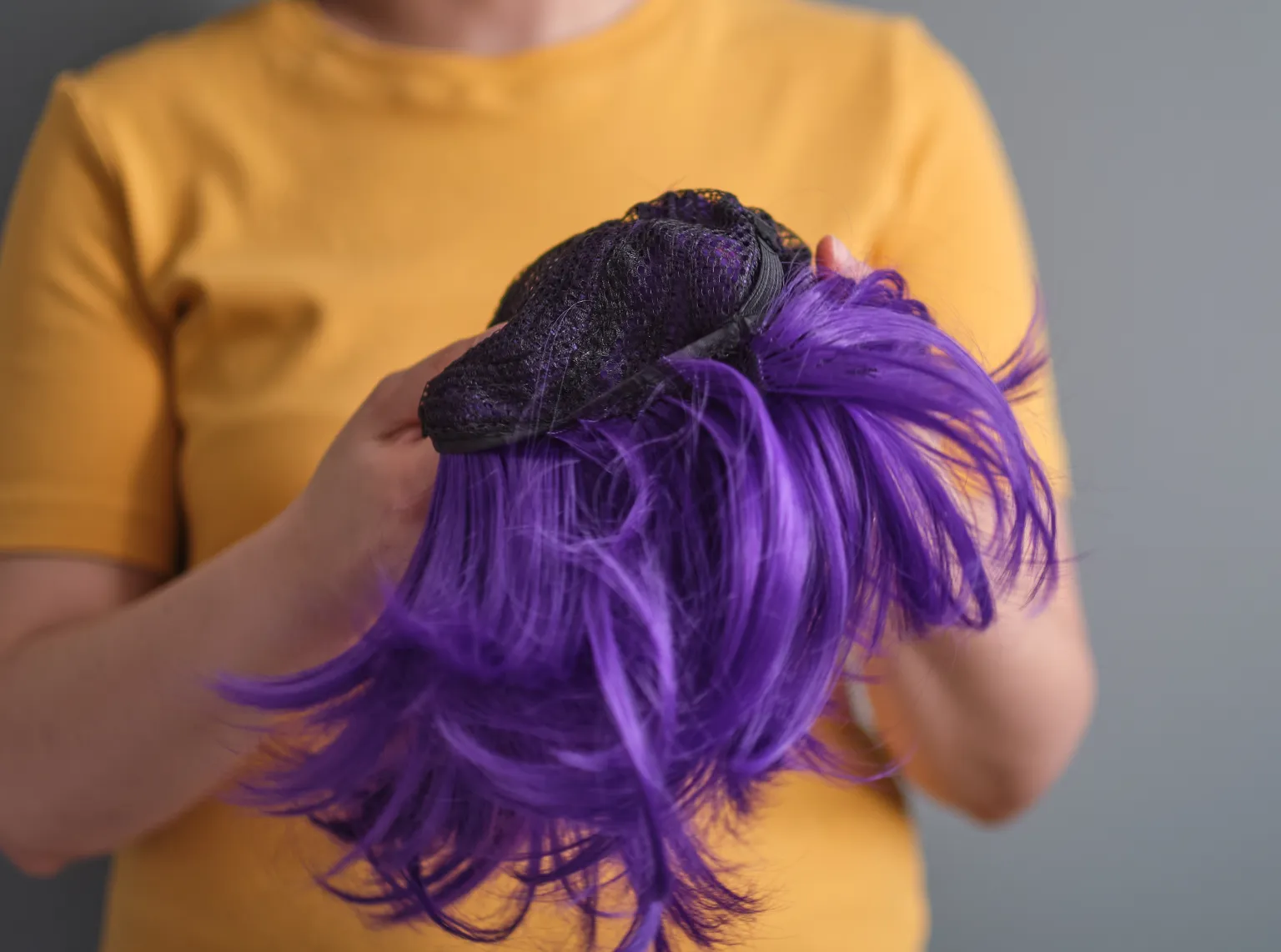
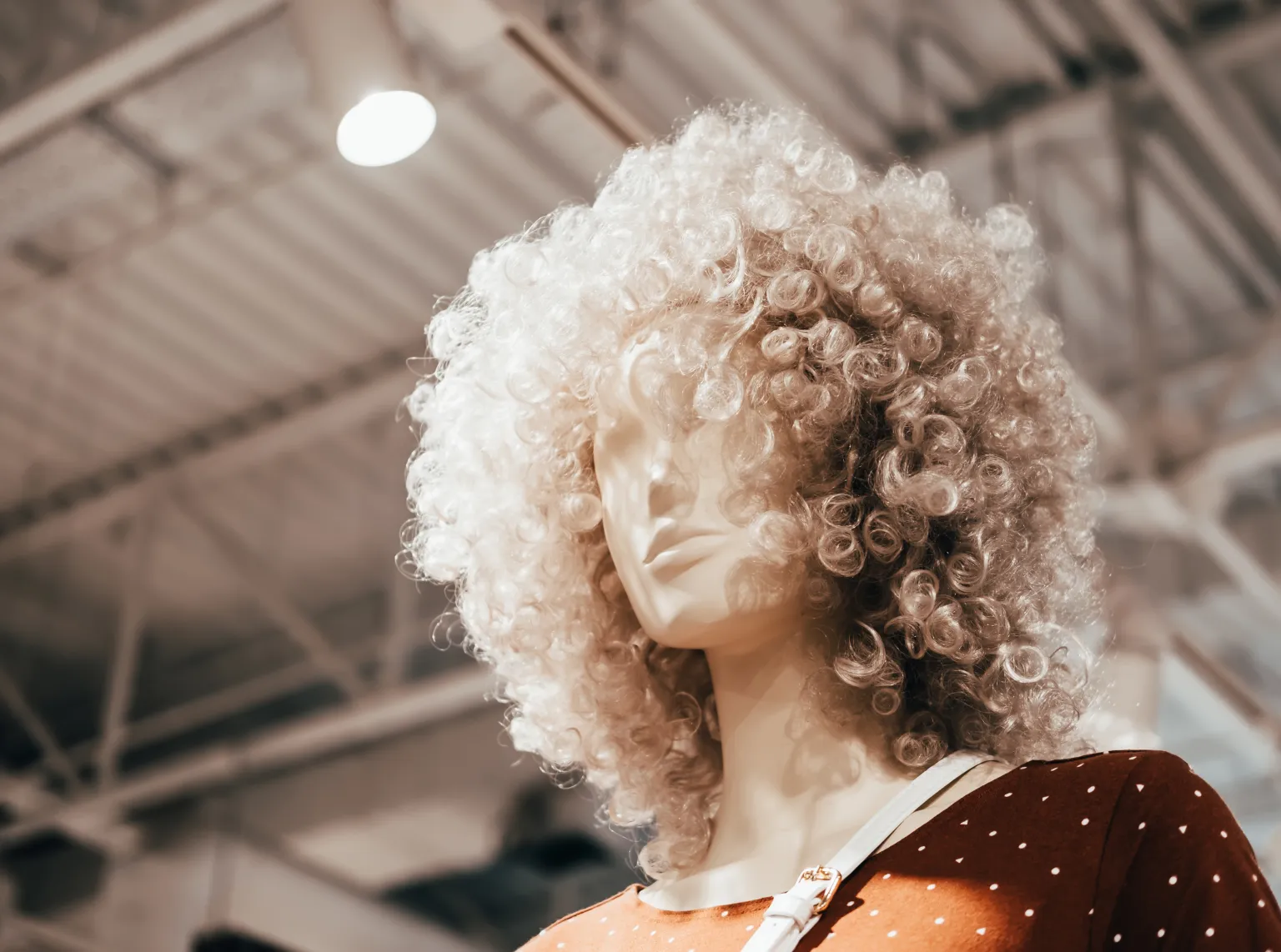
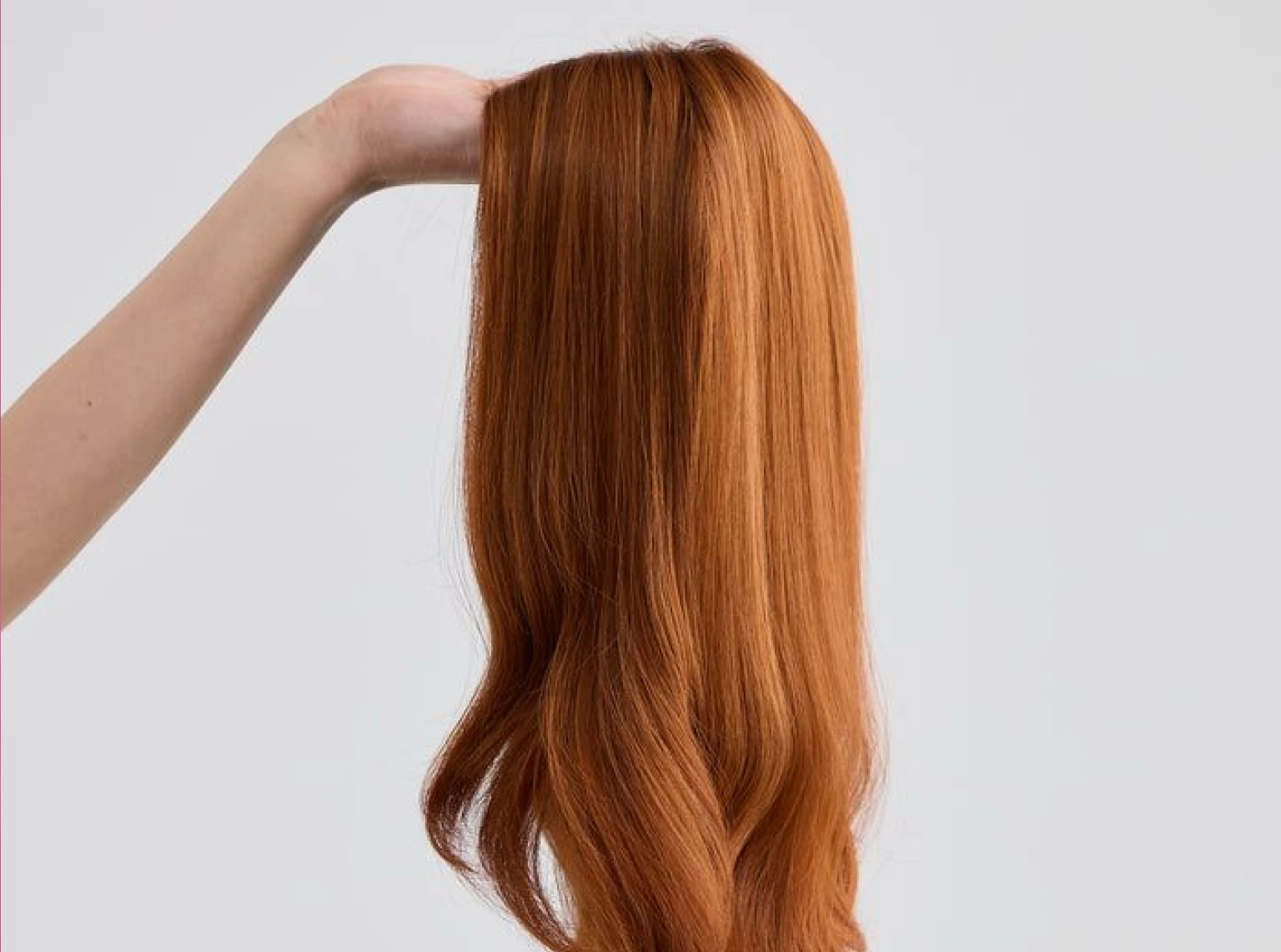
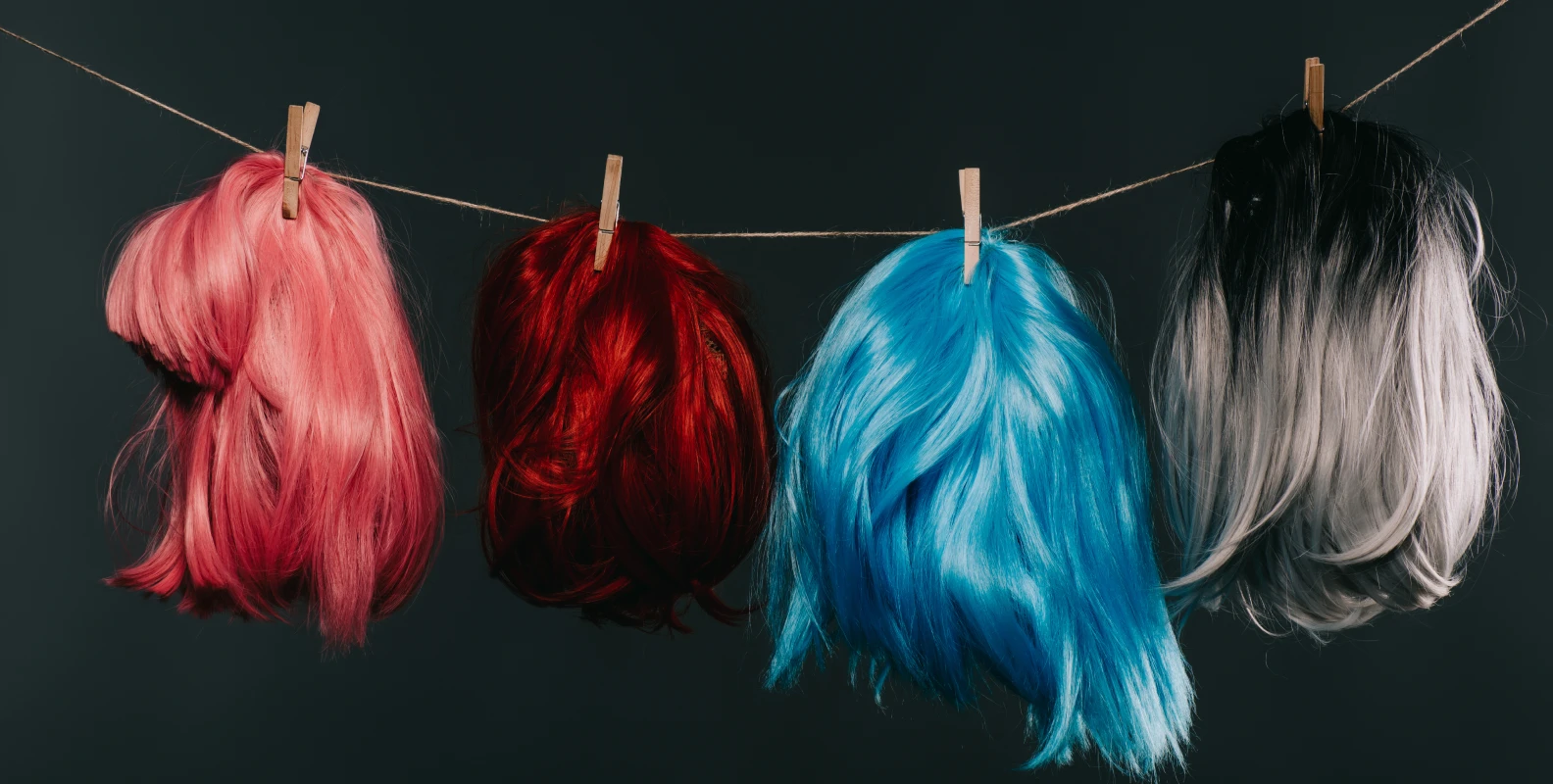
This is the workhorse of costume and budget wigs. The hair is sewn in rows of wefts onto a stretch cap, with no lace anywhere. It is the cheapest cap to make, the most durable, and the fastest to produce in volume, and the gaps between wefts make it breathable. The trade-off is no realistic hairline and no real parting, so the style is fixed. For a bold party or costume wig that gets worn a few times, that is rarely a problem, which is why most of the costume market runs on wefted caps.
Headband Caps
A headband wig swaps the lace front for a fabric headband attached to a wefted cap. The customer slips it on and covers the front edge with the headband, so there is no lace to apply and no adhesive. That makes it one of the easiest wigs to wear and a strong seller in the wear-and-go retail trend, which is why headband wigs have grown fast. It is low cost and breathable, with the limit that the headband stays part of the look and the front hairline is covered rather than shown.
Closure Caps
A closure adds a small lace panel at the top center of the cap, usually 4x4 inches, with larger 5x5, 6x6 and newer 7x5 options. The rest of the cap is wefted. It gives a natural-looking part at the crown without the cost or the application skill of a full front, which makes it a common beginner and budget choice. The limit is parting: a small closure holds one part placement and cannot do a side and a center part in the same wig. For a simple natural part at a low price, it does the job.
Lace Front Caps
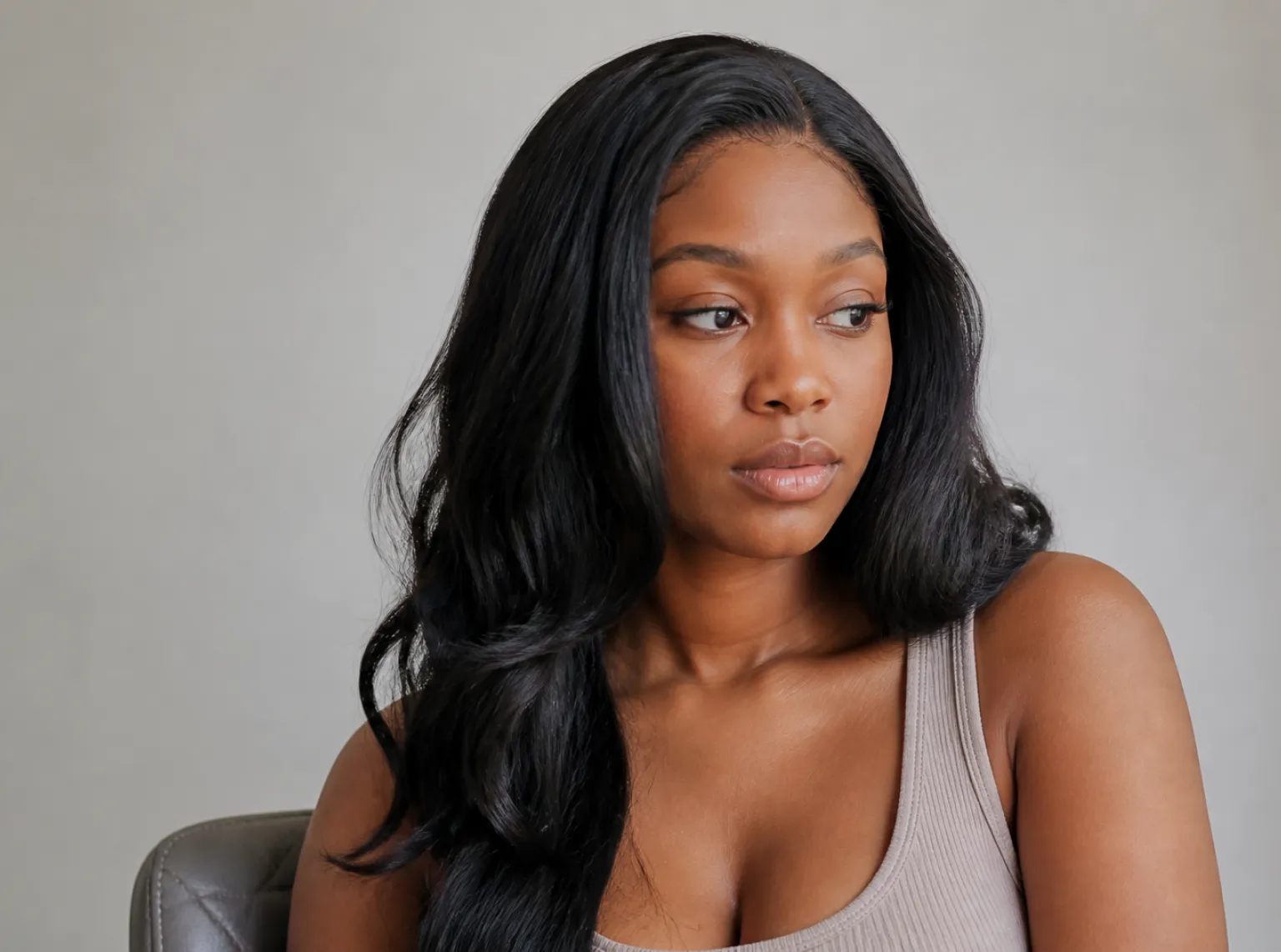
A lace front, also called a frontal, runs sheer lace across the full front hairline from temple to temple, with a wefted back. The common size is 13x4 inches, and 13x6 for more parting depth behind the hairline. It creates the most natural ready-to-wear hairline and lets the customer part anywhere across the front or style the hair off the face. It costs more than a closure and installs with more care along the front edge, though glueless versions remove the adhesive step. For fashion and retail lines that need a real-looking front, a lace front is the standard. HD lace, a thinner and more transparent lace, melts into more skin tones for nearly invisible knots.
360 Lace Caps
A 360 cap runs lace around the entire perimeter, front, sides and nape, with a wefted center. That lets the customer pull the hair into a high ponytail or an updo without exposing a wefted edge at the back, which a closure or a standard front cannot do. It sits between a lace front and a full lace in both styling freedom and price. It carries more lace than a front, so it costs more and needs careful handling. For lines built around ponytail and pulled-back styling, it earns its place.
Full Lace Caps
A full lace cap is lace from front to nape, with every strand hand-tied. It gives the most natural result and the most freedom, parting anywhere, updos, braids and high styles, and it lays flat and breathes well. It is the most labor-intensive cap, so it sits at the top of the price range, and the all-lace base is the most delicate to handle. For premium and salon lines where styling freedom and realism justify the cost, a full lace is the top tier.
Monofilament and Hand-Tied Caps
Monofilament uses a fine, sheer mesh at the part or crown where hairs are tied by hand, so the scalp shows through and the part looks real. It is often paired with a lace front for a natural part plus a natural hairline. A fully hand-tied cap ties every strand for soft movement and a light feel against the scalp. Both add comfort and realism for customers who wear a wig daily or have a sensitive scalp, at a mid-to-high cost. For medical and premium daily-wear lines, they are worth specifying.
Glueless Caps and HD Lace
Glueless is a feature, not a separate construction. A glueless wig comes with adjustable straps, combs and an elastic band, and usually a pre-cut lace, a pre-plucked hairline and pre-bleached knots, so the customer wears it straight out of the box with no glue. It can be built on a closure, a lace front or a 360. This is what drives the wear-and-go retail trend, since it removes the skill barrier that scares off new wig buyers. Pairing a glueless cap with HD lace gives a natural front that almost anyone can put on, a strong combination for direct-to-consumer lines.
Which Cap for Which Product Line
The choice gets simple when you map it to the product and the customer. Use this as a sourcing matrix.
| Product line | Best cap | Why |
|---|---|---|
| Party, Halloween, costume | Machine-wefted | Lowest cost, durable, voluminous, hairline realism not critical |
| Cosplay | Machine-wefted or lace front | Exact shapes and volume; a front where the look needs a real hairline |
| Budget and fast-fashion | Machine-wefted or headband | Lowest cost, fastest turns |
| Beginner and wear-and-go retail | Headband or glueless lace front | Slip-on, no skill, drives direct sales |
| Fashion and natural daily wear | Lace front, 13x4, or glueless | Natural front at a reasonable cost |
| Premium realism and updo styling | 360 or full lace | Part and pull back anywhere, most natural |
| Realistic part and comfort | Monofilament with a lace front | Natural scalp at the part, breathable |
For the segments we see most, a party, Halloween or cosplay line, a machine-wefted cap usually wins on cost and durability, and you add a lace front only where a character or a style needs a real hairline.
How Raysman Builds Your Caps
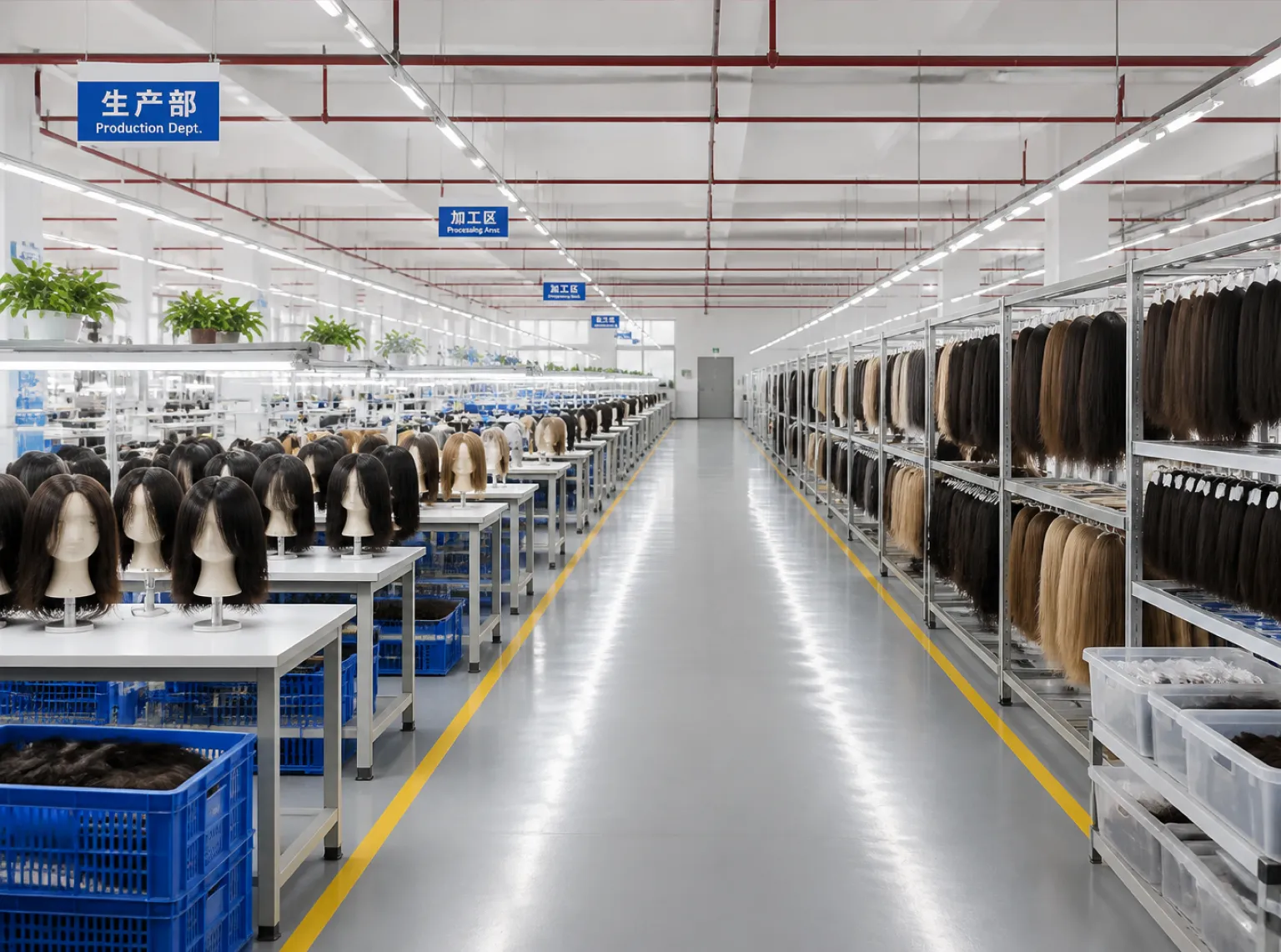
We build every cap on this list in synthetic and blended fiber, matched to your line. Raysman runs a 10,000 m² plant in Zhejiang, 16 years in, producing machine-wefted, headband, closure, lace front, 360 and full lace caps, with glueless and HD lace options and ISO 9001, BSCI and OEKO-TEX Standard 100 in scope. We sample standard styles in three days, run an MOQ of 100 per style, and handle custom cap construction and private label for OEM and ODM lines. As you evaluate production partners, our guide on how to vet a B2B wig supplier covers the essential documents and quality checks to request. Tell us your styles, your price point and how your customers wear them, and we will spec the right cap and quote it.
FAQ
What is the difference between a lace front and a closure?
A lace front runs lace across the full front hairline, usually 13x4 inches, so you can part anywhere across the front and style off the face. A closure is a small lace panel at the crown, usually 4x4 inches, that gives one part area at a lower cost and with an easier install. A lace front looks more natural across the whole hairline; a closure is simpler and cheaper.
What is a 360 lace wig?
A 360 lace wig has lace around the entire perimeter of the cap, front, sides and nape, with a wefted center. It lets the wearer pull the hair into a high ponytail or updo without showing a wefted edge at the back. It sits between a lace front and a full lace in price and styling freedom.
What does glueless or wear-and-go mean?
A glueless wig is built to wear without adhesive. It uses adjustable straps, combs and an elastic band, and usually comes with pre-cut lace, a pre-plucked hairline and pre-bleached knots, so the customer puts it on straight out of the box. Glueless can be built on a closure, a lace front or a 360.
What is HD lace?
HD lace is a thinner, more transparent lace used at the hairline. It melts into a wider range of skin tones than standard transparent or Swiss lace, so the knots and the lace edge are nearly invisible. It is a lace quality tier, often paired with a glueless cap for a natural, easy-to-wear front.
Which wig cap is the cheapest, and which looks most natural?
Machine-wefted and headband caps are the lowest cost, since they use no hand-tied lace. Full lace gives the most natural and flexible result, with 360 and a good HD lace front close behind. For most fashion lines, a lace front balances a natural front with a reasonable cost.
Do synthetic wigs come in lace front and full lace?
Yes. Cap construction is independent of fiber, so synthetic wigs are built in machine-wefted, closure, lace front, 360 and full lace caps, with glueless and HD lace options, the same as human hair wigs. The fiber on the cap and the way the cap is built are two separate choices.
-

Raysman
Synthetic Wig Manufacturer
Raysman is a Zhejiang-based synthetic wig manufacturer specializing in party, costume, and fashion color wigs — producing over one million pieces a year from our 10,000 m² Longyou facility. We are BSCI, ISO 9001, and OEKO-TEX Standard 100 certified, and a designated supplier to Disney and Walmart.