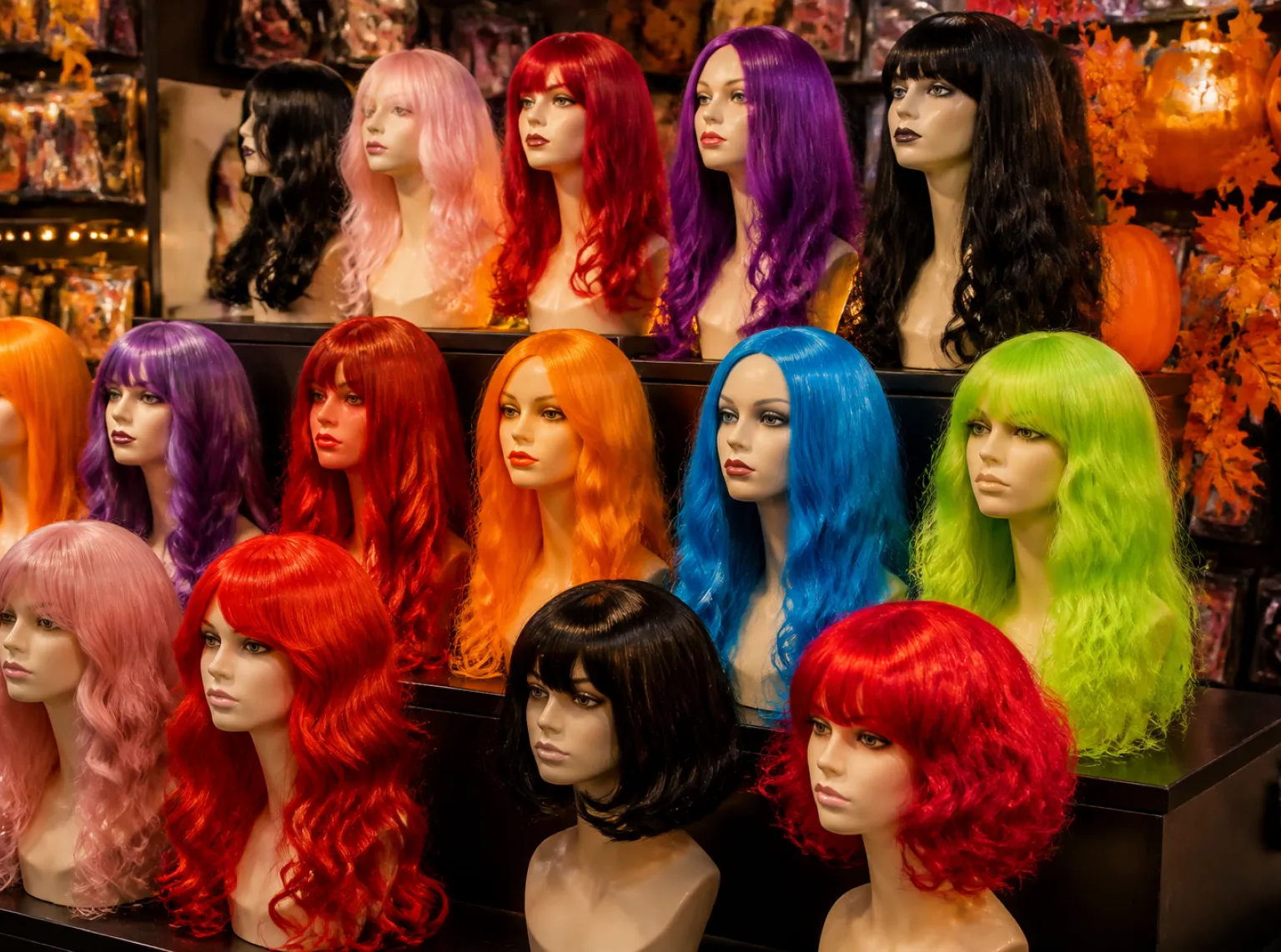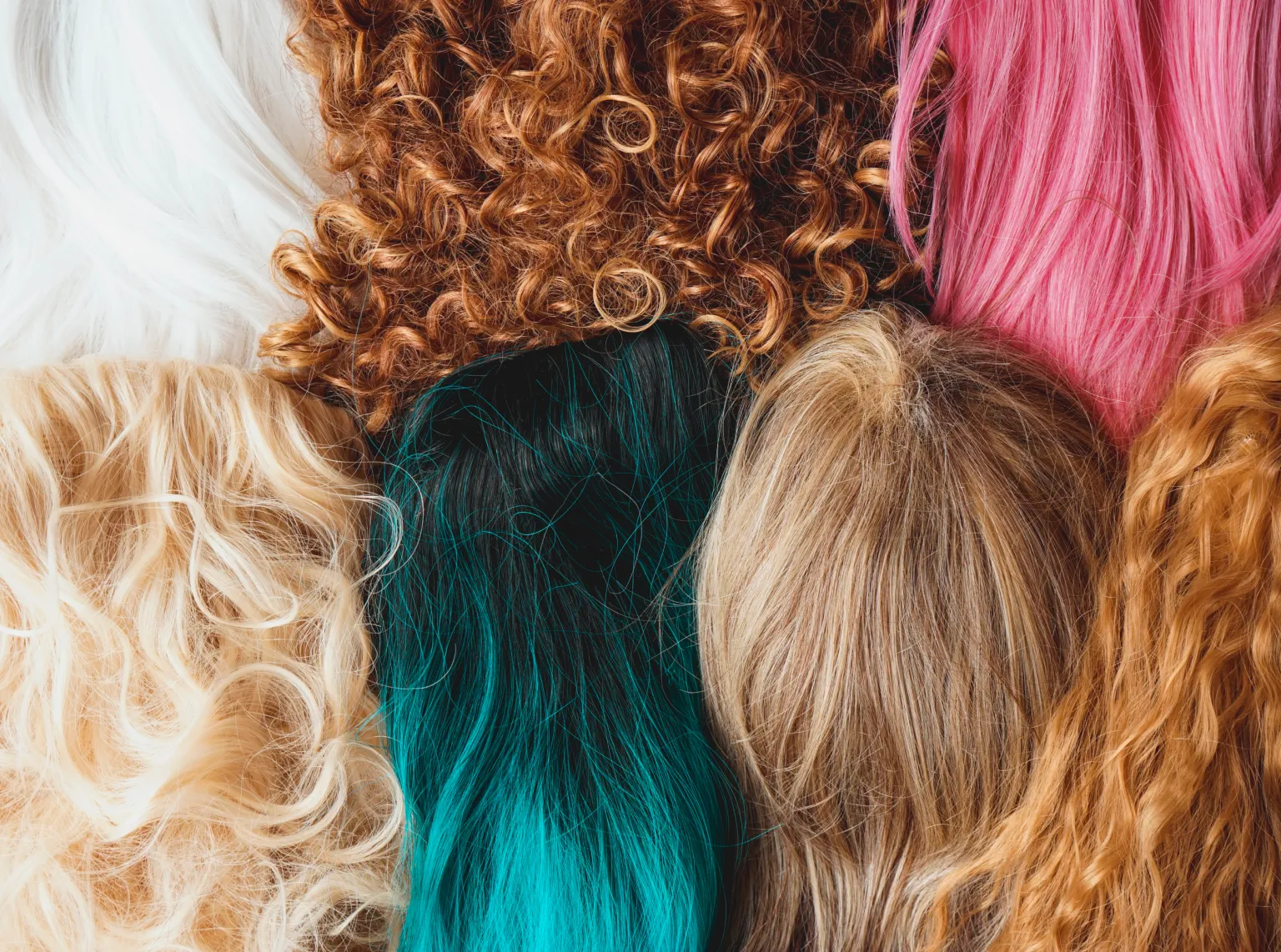

The retail market for non-traditional hair colors operates year-round, driven by fashion trends, festival demographics, and the expanding cosplay sector. For B2B procurement teams, regional distributors, and catalog managers, sourcing colored wigs introduces a unique set of supply chain variables. Unlike human hair, which undergoes chemical cuticle stripping and acid dyeing, synthetic polymers require entirely different pigmentation protocols. Requesting a custom color match for a synthetic unit requires an understanding of factory-level polymer extrusion, mechanical blending, and thermal dye sublimation. Procurement officers who understand these chemical and mechanical processes can eliminate batch inconsistency, enforce strict colorfastness tolerances, and negotiate accurate Minimum Order Quantities (MOQs). This technical guide details the industrial engineering behind synthetic wig coloration.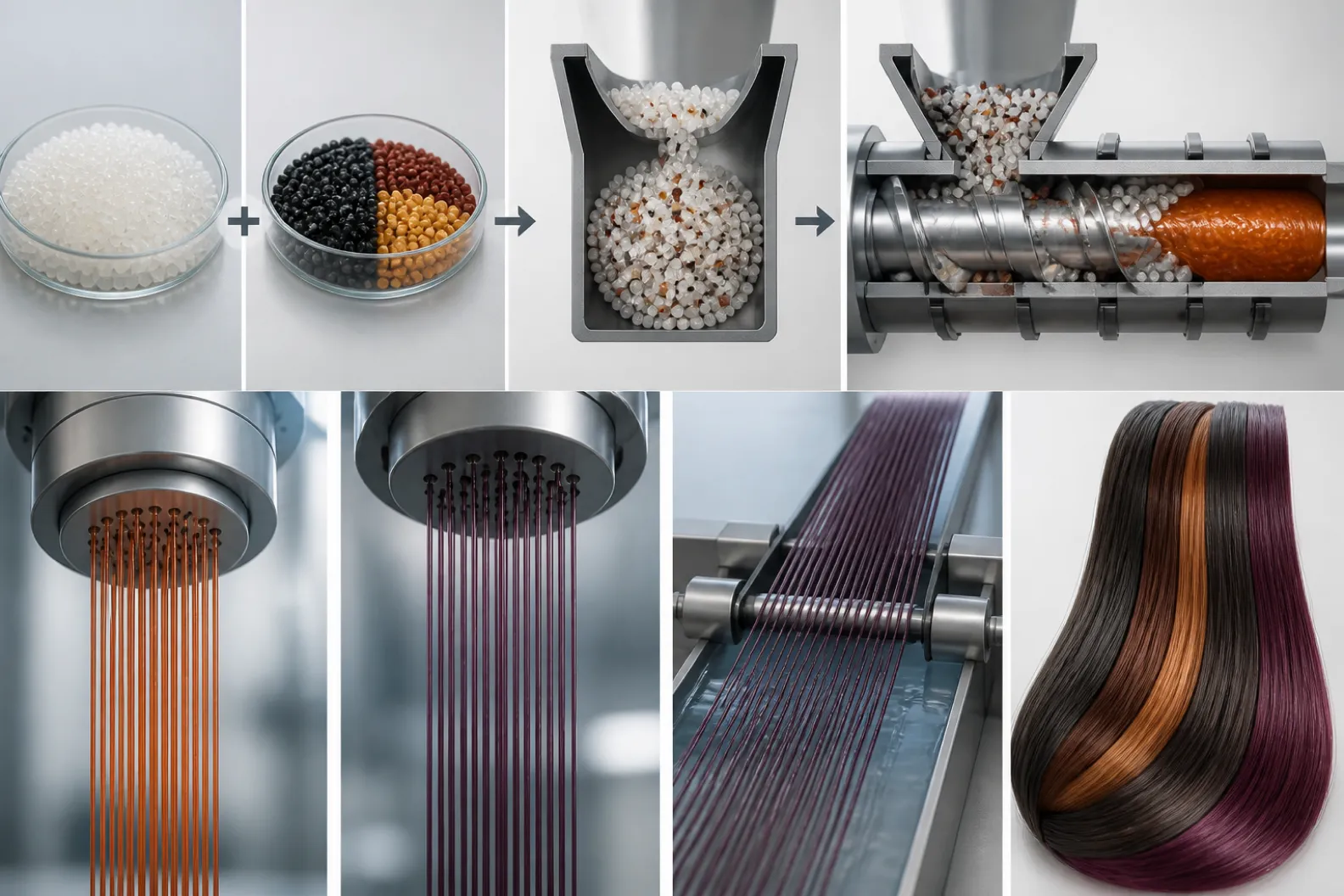
Masterbatch Pigmentation: The Pre-Extrusion Phase
The most fundamental error in wholesale synthetic procurement is assuming factories dye the hair after it is manufactured. Premium synthetic fibers, including modacrylics (Kanekalon) and high-temperature Polyethylene Terephthalate (PET), achieve their primary solid colors before the fiber physically exists. This process is known as mass pigmentation or solution dyeing.
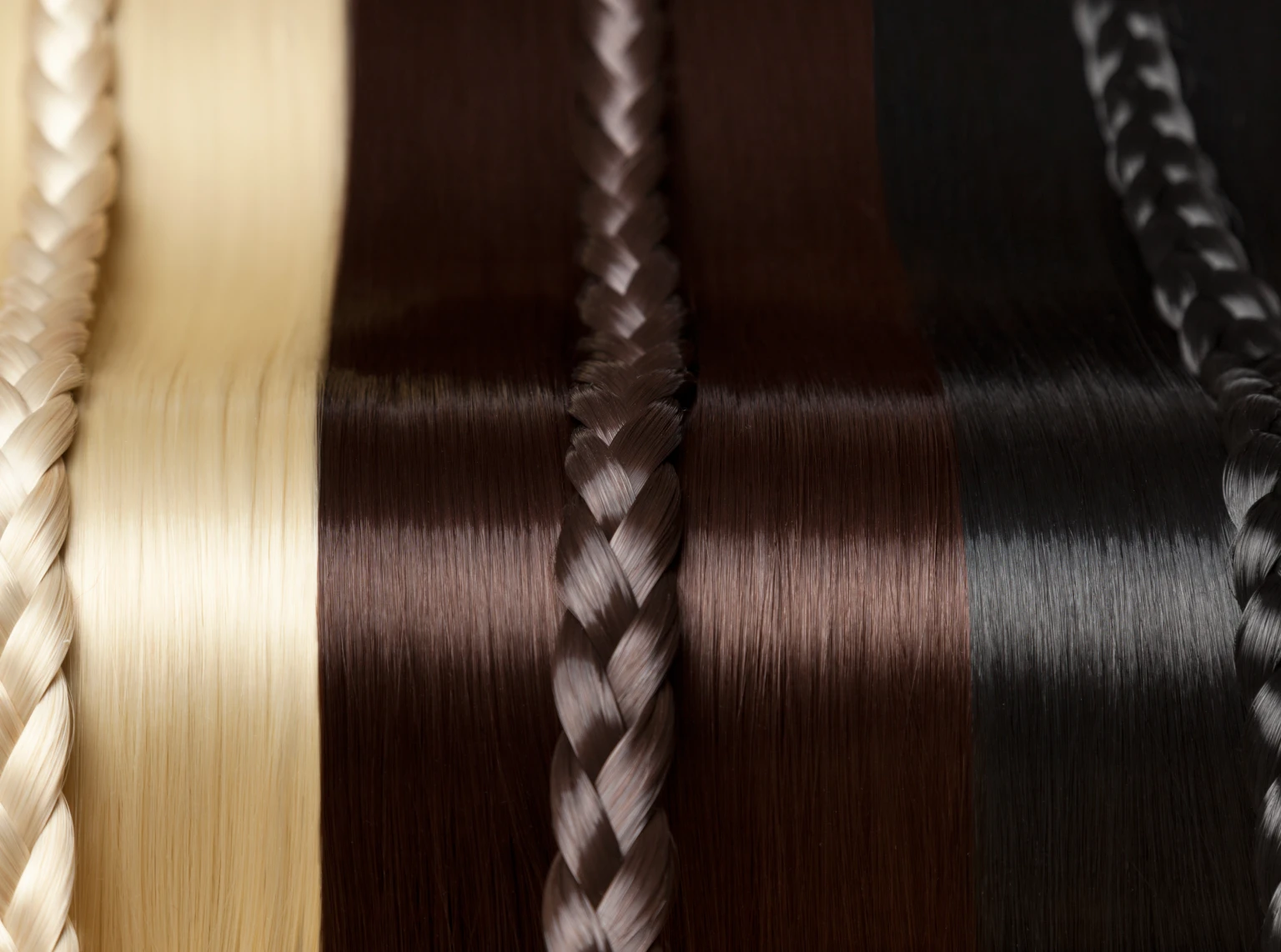
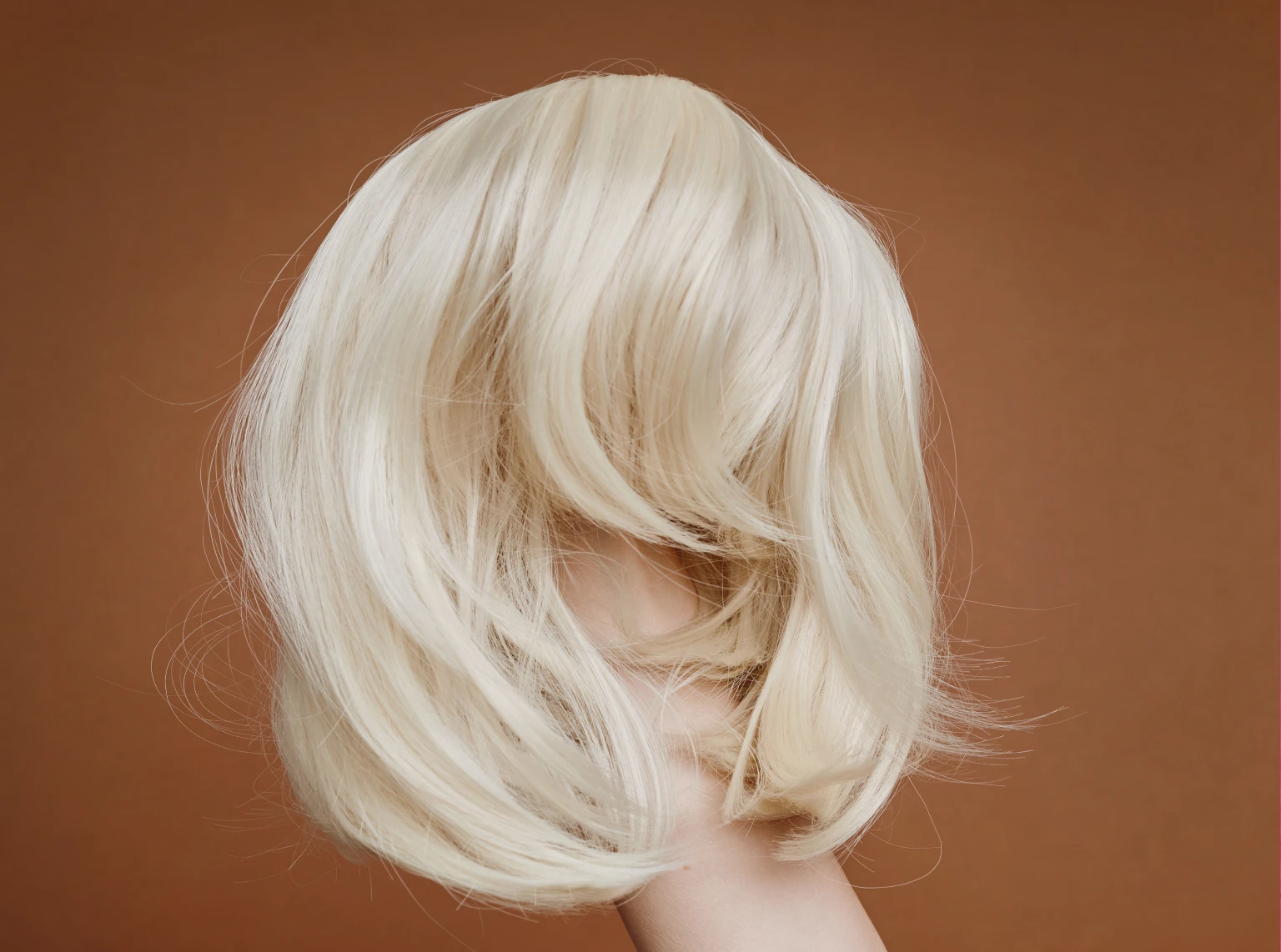
During the initial chemical formulation, raw polymer chips are melted into a viscous liquid. The factory introduces highly concentrated pigment pellets, known as color masterbatch, directly into this liquid polymer. The pigmented solution is then forced through microscopic multi-lobal spinnerets to extrude the physical hair strands. Because the pigment is locked within the molecular structure of the polymer itself, rather than sitting on the surface as a coating, the resulting fiber possesses absolute colorfastness. It cannot fade from standard washing or UV exposure. Brands ordering standard solid shades—such as platinum blonde wigs or primary reds—are purchasing mass-pigmented fibers. This process ensures perfect color consistency across 10,000-unit production runs, provided the factory utilizes the same masterbatch formulation code.
The Hackling Process: Mechanical Color Blending
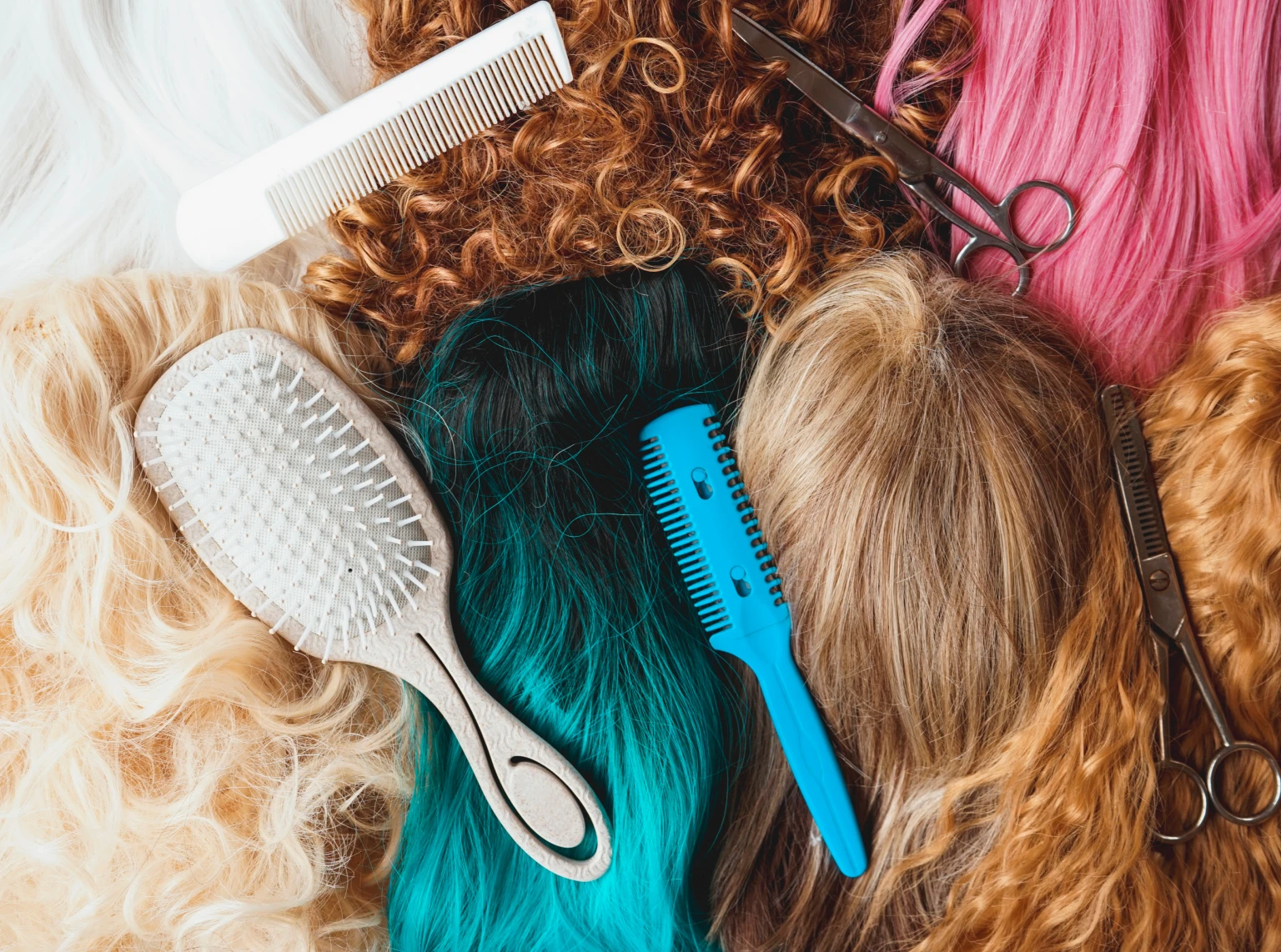
Consumer demand rarely centers on flat, monochromatic shades. The modern retail market requires dimensional colors, including highlights, lowlights, and complex blends. Because synthetic fibers cannot be easily painted or foiled like human hair, factories achieve dimensional color through mechanical engineering on a device called a hackle.
A hackle is a large, stationary bed of vertical steel pins. To create a dimensional "Mixed" color (M-Color), technicians take raw bundles of pre-extruded fibers in distinct solid colors—for example, 70% of a #4 Medium Brown and 30% of a #27 Strawberry Blonde. The technicians manually pull these bundles through the steel pins hundreds of times. The hackle separates and interweaves the individual strands until they form a cohesive, uniform blend. The visual output depends entirely on the blending ratio. A 50/50 ratio produces a distinctly streaked highlight effect, while a 90/10 ratio produces a subtle dimensional depth.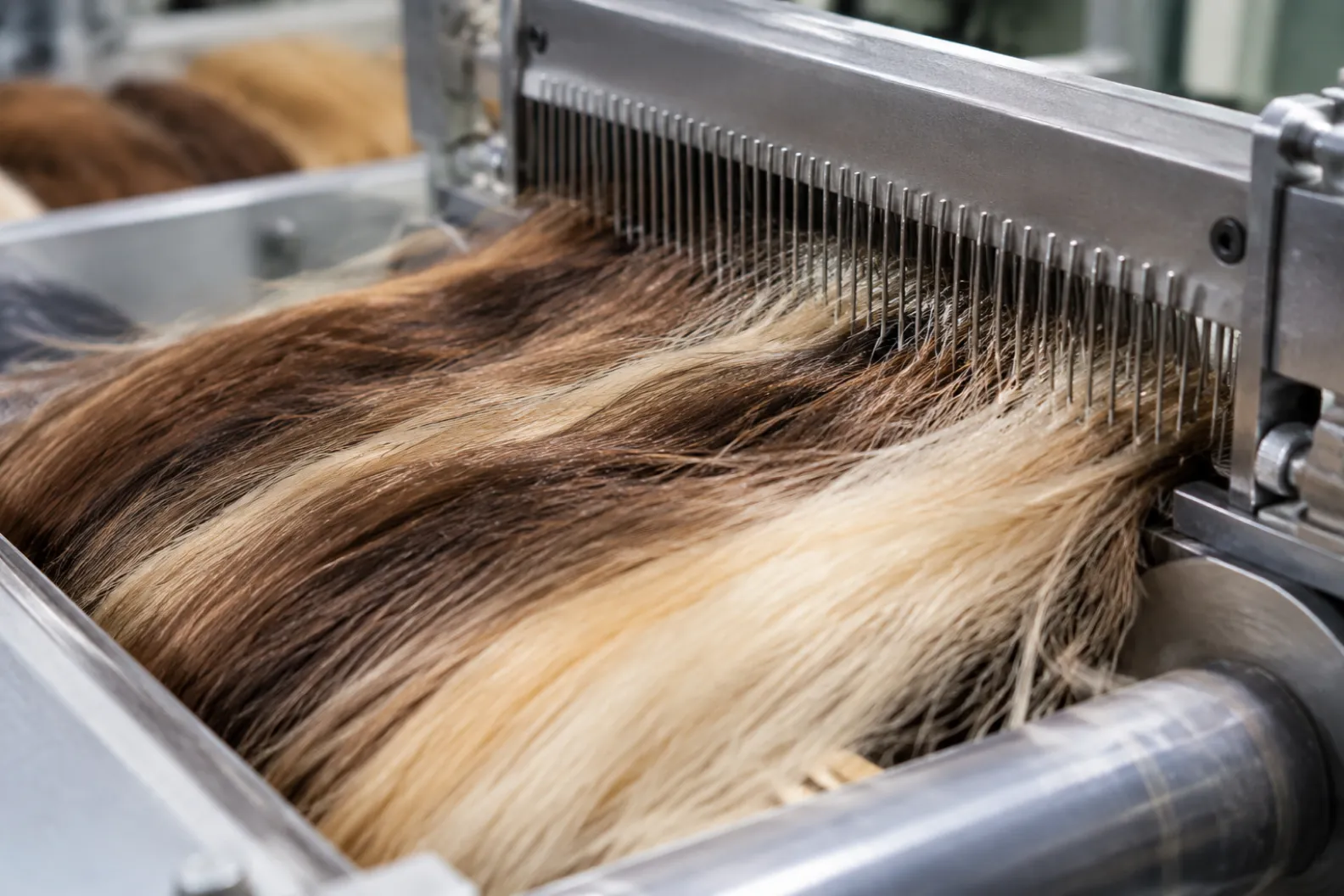
Decoding Factory Color Codes: P-Colors vs. M-Colors
B2B buyers must specify the exact blending architecture on their purchase orders to prevent miscommunication.
- M-Colors (Mixed): The fibers are pulled through the hackle until the blend is completely uniform. The individual colors are nearly indistinguishable unless examined closely.
- P-Colors (Piano): The colors are kept in distinct, localized bundles during the wefting and ventilation process. A P-color unit places a solid strip of blonde directly next to a solid strip of brown, mimicking high-contrast, chunky salon highlights resembling the keys of a piano.
Understanding the hackling process explains why custom color matching carries specific MOQ requirements. A factory cannot blend just five wigs worth of fiber on an industrial hackle; the mechanical loss rate would be too high. Custom mechanical blends typically require a minimum raw material commitment of 10 to 20 kilograms per color formula.
Thermal Disperse Dyeing for Ombre and Balayage (T-Colors)
While mechanical blending handles horizontal highlights, vertical color transitions—such as Ombre or root-fade Balayage—require a different industrial approach. These are designated in factory catalogs as T-Colors (Two-Tone) or TT-Colors (Three-Tone).
Achieving a seamless vertical gradient on synthetic polymers requires thermal disperse dyeing. Disperse dyes are the only chemical compounds capable of penetrating the hydrophobic surface of high-temperature PET fibers. The factory suspends the pre-wefted bundles over vats of specialized disperse dye heated to near-boiling temperatures (typically 100°C to 120°C). The hair is submerged partially into the vat. The heat temporarily expands the molecular structure of the polymer, allowing the disperse dye molecules to embed themselves into the fiber. As the fiber cools, the structure contracts, locking the dye permanently inside.
To create a gradual Ombre fade, the factory utilizes automated dipping machines that submerge the fiber at a calculated, decelerating speed, creating a saturated color at the tips that gently diffuses upward. Procurement teams must audit T-Color samples for "dye bleeding" or harsh demarcation lines. A premium Ombre transition should show a smooth gradient over at least 2 to 3 inches of the fiber shaft.
Color Matching Tolerances and Spectrophotometry
In high-volume B2B sourcing, subjective visual assessment of color is a critical liability. Factory fluorescent lighting differs from office incandescent lighting, altering the perceived shade. To enforce objective quality control, procurement officers must utilize standardized color matching systems.
The global wig industry utilizes standard universal ring charts (often based on the original Kanekalon 1-613 color scale). When a buyer orders a "#33 Dark Auburn," the factory formulates the masterbatch or mechanical blend to match that exact swatch. For proprietary brand colors outside the standard ring chart, buyers submit Pantone textile codes or physical swatches.
Advanced factories verify bulk production against the approved prototype using a spectrophotometer. This device measures the exact wavelength of light reflected by the fiber and outputs a Delta E (ΔE) value. The ΔE value represents the mathematical distance between the target color and the production batch. In commercial textile and fiber manufacturing, a ΔE value of less than 2.0 is considered a commercially acceptable match, indistinguishable to the average human eye. Buyers executing strict OEM contracts should specify a maximum ΔE tolerance in their purchasing agreements.
Yield Loss and Wholesale Cost Implications
Color specifications directly influence the factory-gate price. Synthetic wigs manufactured in standard solid colors (#1B, #2, #4) carry the lowest procurement cost. These masterbatches are produced continuously in massive volumes, yielding high economies of scale.
Dimensional colors (M-Colors and P-Colors) increase costs through manual hackling labor and mechanical yield loss. During the extensive combing required to blend fibers, a percentage of the raw material breaks or tangles and is discarded as waste. This yield loss is factored into the unit price.
T-Colors (Ombre) carry the highest premium within the synthetic category. The thermal disperse dyeing process is energy-intensive, requires specialized chemical vats, and adds a distinct secondary step to the manufacturing workflow. Furthermore, dyeing the roots dark on a light base requires precision manual labor to prevent dye from splashing onto the mid-shafts. Distributors must calculate these tiered acquisition costs when structuring their retail pricing architecture.
Bonecraft OEM Color Specifications
Precision pigmentation is a core competency within the Bonecraft manufacturing infrastructure. We process wholesale orders through segregated production lines to ensure absolute color fidelity. Our modacrylic and high-temperature PET fibers undergo strictly calibrated mass pigmentation at the extrusion level, guaranteeing EN 71-2 compliant colorfastness. Dimensional M-Colors and P-Colors are executed by senior technicians utilizing standardized hackling ratios to ensure bulk batches perfectly replicate approved TOP (Top of Production) samples. For specialized Ombre and root-fade architectures, our automated thermal disperse dyeing lines provide seamless, repeatable gradients without harsh demarcation lines. B2B buyers requiring custom Pantone matching or proprietary blend formulations can submit physical swatches and initiate technical reviews through our direct B2B sourcing channels.
-

Raysman
Synthetic Wig Manufacturer
Raysman is a Zhejiang-based synthetic wig manufacturer specializing in party, costume, and fashion color wigs — producing over one million pieces a year from our 10,000 m² Longyou facility. We are BSCI, ISO 9001, and OEKO-TEX Standard 100 certified, and a designated supplier to Disney and Walmart.