

Type "lace front vs full lace" into a search bar and the results mostly answer a different question than the one you asked. They compare human hair wigs for salon clients. If you wear or sell synthetic fashion wigs, the calculus changes: a full lace cap needs 30 to 60 hours of hand-tying per piece, and that labor makes little sense on fiber with a 4-6 month daily-wear lifespan. So the practical question becomes: which construction fits the fiber, the budget, and the way the wig will actually be worn? We build all three constructions in synthetic fiber, and this guide gives the honest version of each.
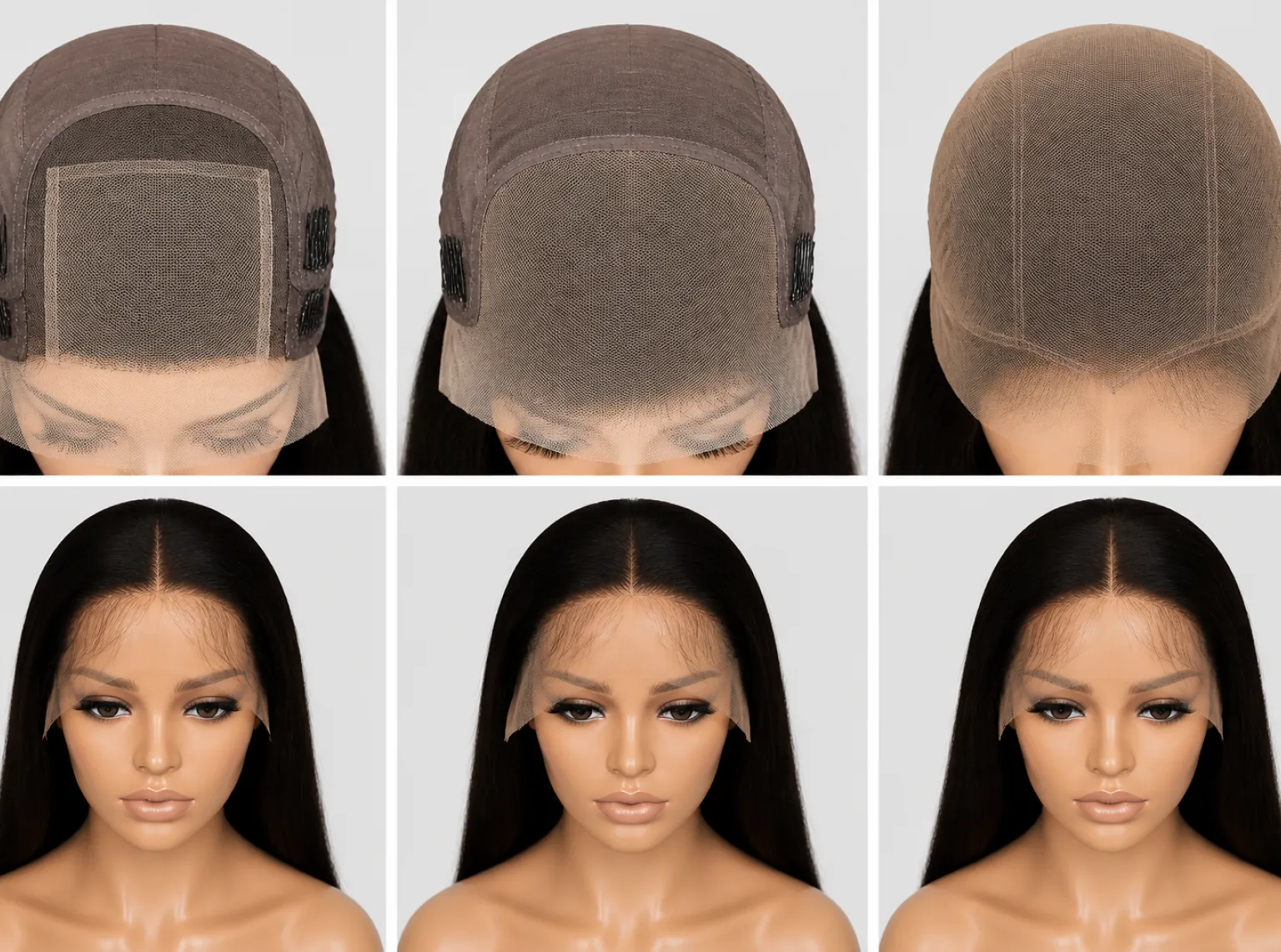
The short answer. A lace front has a sheer lace panel at the front hairline and a wefted cap behind it — natural where people look, affordable, and the default choice for everyday wear. A full lace wig is hand-tied lace across the entire cap — part and style it anywhere, wear it up, at roughly double the price and half the durability. A closure wig carries a small 4x4 or 5x5 lace patch at the crown — the simplest, cheapest entry into lace, and the friendliest to beginners. For synthetic fashion wigs specifically, lace front and closure constructions dominate for a reason: they put the realism exactly where it is visible and skip the labor that is not.
Lace Front vs Full Lace vs Closure: The Comparison Table
| Factor | Lace front | Full lace | Closure |
|---|---|---|---|
| Lace coverage | Front hairline, ear to ear (typically 13x4 or 13x6) | Entire cap | Crown patch (4x4, 5x5, or 7x6) |
| Parting freedom | Within the front panel | Anywhere on the head | One part area |
| Updos and high ponytails | Limited | Yes | No |
| Breathability | Good at front | Best all over | Good |
| Durability | High — sturdier base | Lower — delicate all-lace cap | Highest — smallest lace area |
| Install difficulty | Easy | Advanced or professional | Easiest, often glueless |
| Relative price | Mid | Highest (roughly 2x lace front) | Lowest |
| Best for | Everyday wear, photo-ready hairlines | Styling freedom, updos, premium lines | Beginners, budget lines, daily simplicity |
The labor behind the price is worth knowing. A lace front pairs 6-12 hours of hand-tying at the hairline with machine wefting behind it. A full lace wig is hand-tied everywhere, 30-60 hours of skilled work per piece. That gap — not the lace itself — is what you pay for.
Lace Front Wigs
A lace front wig places a sheer lace panel across the front hairline, usually 13 inches ear to ear and 4 to 6 inches deep, with individual strands hand-tied into the lace so the hair appears to grow from the skin. Behind the panel, machine-sewn wefts keep the cap strong and the price sane. The construction gives you the most valuable realism feature in the industry — a convincing hairline — exactly where eyes land first. The trade-offs sit behind the hairline: parting is confined to the lace area, and high ponytails or updos expose the wefted cap. For hair-down styles, which is how most fashion wigs are worn, a lace front covers everything that matters. It is also the easiest lace construction to install, which is why most first-time wearers start here.
Full Lace Wigs
A full lace wig extends that lace across the entire cap. Every strand is hand-tied, so the wig parts anywhere, lifts into a high ponytail, and reads as natural from every angle, with the best airflow of any construction. The costs are real: the price roughly doubles against a comparable lace front, the all-lace cap is the most delicate option and demands gentle handling, and installation takes skill or a stylist. Here is the part most guides skip. In human hair, that investment amortizes over one to three years of wear. In synthetic fiber, a full lace cap's labor cost lands on a product with a shorter service life — which is why full lace synthetic wigs serve specific niches (theatrical, drag, premium fashion shoots) rather than the everyday market. If a synthetic catalog leads with full lace across the board, question the pricing logic.
Closure Wigs
A closure wig carries a small lace patch — 4x4, 5x5, or 7x6 inches — at the crown, closing off the cap with one realistic part. It is the simplest lace construction: quick to install, easy to remove, often wearable glueless, and the most durable since there is less lace to damage. The limits are parting — you get one part area, and pulling the hair high exposes the cap — so closures suit wearers who keep a consistent everyday style. For beginners and for budget-conscious lines, a closure delivers the scalp-realistic part at the lowest cost of entry into lace.
Which Construction for Which Wearer
Match the cap to the use, not the marketing. The decision usually resolves in one line per case:
- Daily wear, hair down, natural hairline wanted. Lace front. This is the mainstream answer and the volume seller in every market we ship to.
- Beginners and low-maintenance wearers. Closure, ideally a glueless version with an elastic band and combs. Small lace area, fast install, nothing to melt or maintain.
- Updos, ponytails, frequent style changes. Full lace, with the budget and the care routine to match.
- Stage, drag, editorial, and theatrical work. Full lace or a lace front built for heavy styling — realism from every angle matters under lights and cameras.
- Costume, party, and seasonal wear. A quality basic cap usually beats cheap lace. Costume wigs are worn for hours, not months, and the budget is better spent on color and style than on a hairline nobody will inspect.
Lace Quality Matters as Much as Coverage
Two lace fronts can differ more than a lace front and a closure, because lace grade drives the result. HD lace is the thinnest and most invisible option, disappearing into most skin tones on camera and in person. Transparent lace runs slightly thicker, suits lighter complexions, and tolerates handling better. Medium brown lace serves deeper skin tones without tinting. Beyond grade, two factory details decide whether the hairline convinces: a pre-plucked, graduated front edge, and knots bleached or small enough to read as skin rather than dots. When you compare suppliers, compare these specs — the words "lace front" alone guarantee nothing. Our wig cap construction guide covers cap anatomy in full if you want the deeper version.
What This Means for Wholesale Buyers
For a retail range, the construction mix is a margin decision. Lace fronts carry the mid-price fashion segment and generate the reviews that drive conversion, so they anchor the range. Closures and glueless styles open the beginner and budget tiers without quality complaints. Full lace belongs in the line only where the customer base genuinely styles hair up — in synthetic, that is drag, theatrical, and premium fashion accounts, ordered deliberately rather than stocked broadly. And on any lace SKU, spec the lace grade, the plucking, and the knot treatment in writing; these details decide the unboxing experience that shows up in your reviews. Our wholesale catalog lists constructions per style, and the custom program builds any of the three constructions to your spec — send your target price point and we will tell you honestly which construction fits it.
FAQ
What is the difference between a lace front and a full lace wig?
A lace front wig has a sheer lace panel only at the front hairline, with a machine-wefted cap behind it. A full lace wig has lace across the entire cap, with every strand hand-tied. Full lace allows parting anywhere, updos, and high ponytails, and costs roughly twice as much; lace front delivers the natural hairline — the part people actually see — at a much lower price and with better durability.
What is a closure wig?
A closure wig has a small lace patch, typically 4x4 or 5x5 inches, at the crown, creating one realistic parting area. It is the simplest and most affordable lace construction: quick to install, easy to wear glueless, and very durable. The limitation is styling — one part, no high ponytails — which suits wearers who keep a consistent everyday look.
Which lace wig is best for beginners?
A closure or a glueless lace front. Closures have the smallest lace area and the fastest install; glueless lace fronts add a full natural hairline with elastic bands and combs instead of adhesive. Full lace wigs carry a real learning curve and are better tackled with experience or a stylist.
Can you wear a high ponytail with a lace front wig?
Not convincingly. Pulling the hair up exposes the wefted cap at the back and sides. High ponytails, buns, and updos require a full lace wig, where the lace base stays invisible from every angle.
Is full lace worth it for a synthetic wig?
Only for specific uses. Full lace costs roughly double a lace front because of 30-60 hours of hand-tying, while synthetic fiber has a shorter service life than human hair. For theatrical, drag, or premium editorial use where all-angle realism pays, yes. For everyday fashion wear, a lace front puts the money where it shows.
What do 13x4 and 4x4 mean on a wig listing?
They are the lace dimensions in inches. 13x4 means lace spanning 13 inches ear to ear and 4 inches deep — a lace front panel. 4x4 means a 4-inch square patch at the crown — a closure. Larger lace means more parting space and more realism, at higher cost and with more delicate handling.
What lace color should I choose?
Match your skin tone. HD lace is the most invisible and suits most complexions; transparent lace works best on lighter skin; medium brown lace is made for deeper skin tones. The right lace color disappears against your skin without tinting; the wrong one shows as a line no amount of concealer fully fixes.
-

Raysman
Synthetic Wig Manufacturer
Raysman is a Zhejiang-based synthetic wig manufacturer specializing in party, costume, and fashion color wigs — producing over one million pieces a year from our 10,000 m² Longyou facility. We are BSCI, ISO 9001, and OEKO-TEX Standard 100 certified, and a designated supplier to Disney and Walmart.